You Have the Report. Now What?
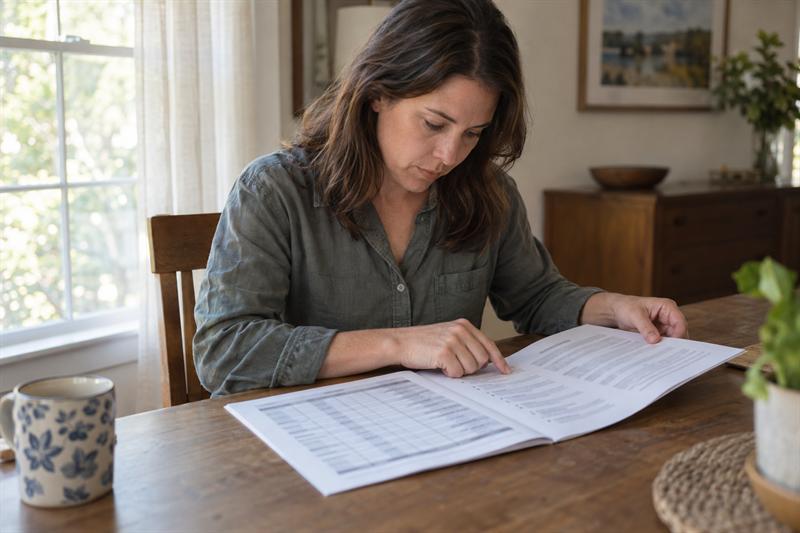
Getting the report often brings two reactions at once. There is relief because something finally helps explain the struggle, and there is pressure because the findings and recommendations now need to be used in real life.
This is where many families feel stuck. The evaluation may answer important questions, but the next steps can still feel unclear. The report is not just a summary of test results. It is a guide for what may need to change at school, what may need to change at home, and what support may need to happen next.
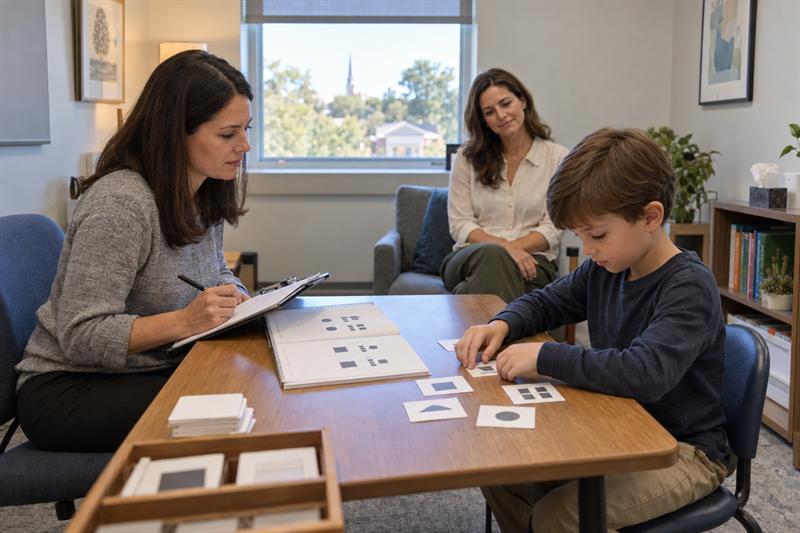
If you want a clearer picture of what leads up to this point, The Psychoeducational Evaluation Process: From Intake Meeting to Feedback explains the steps before the report is delivered. This article begins after that stage, when the main question becomes how to use the results well.
Start With the Big Picture, Not Every Detail at Once
One of the quickest ways to feel overwhelmed is to treat every sentence in the report as equally urgent. That can lead to scattered decisions or no action at all. It helps to begin with the main questions the evaluation answered.
In many cases, the report clarifies three things: what is making school or daily functioning harder, what the student’s strengths and weaknesses look like, and what kinds of support are most likely to help. That broad understanding matters more at first than trying to absorb every score or technical term.
After feedback sessions, families sometimes focus on the diagnosis or one phrase in the report and miss the larger picture the evaluation is describing. A diagnosis can be important, but it does not explain everything on its own. The learning profile usually offers more practical information about how a student thinks, works, manages frustration, and responds to demands.
A simple way to organize the report is to sort it into four parts:
- Findings: what the testing showed
- Diagnoses or classifications: how those findings are understood clinically or educationally
- Recommendations: what support is likely to help
- School implications: what may need to be discussed for access, accommodations, or services
If the report still feels hard to read, How to Read a Psychoeducational Evaluation Report in Plain Language can help break down the terminology. That can make the next decisions easier because the family is working from understanding instead of guesswork.
How to Use Results at School
Share the Report With the Right School Team Members
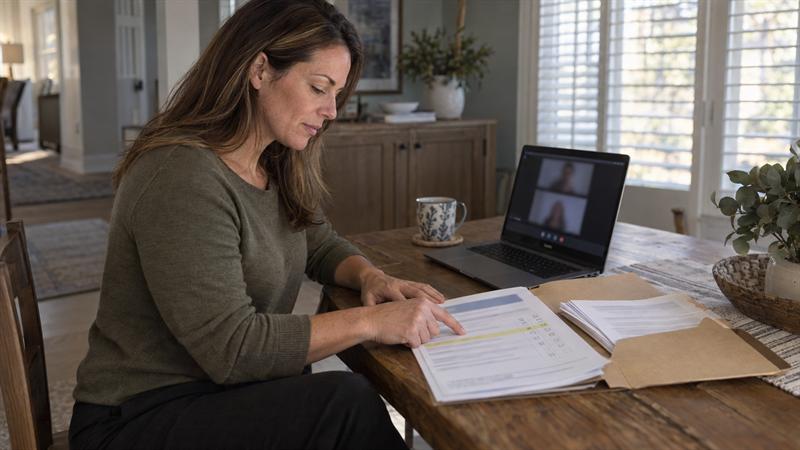
The report usually needs to be shared with the people who can use it to support the student. Depending on the setting, that may include a teacher, school counselor, case manager, learning specialist, or administrator.
Problems often start when the report is sent without context. School teams are usually in a better position to respond when the report is paired with a clear explanation of the concerns the family is seeing now. That might include written work taking too long, reading demands that outpace endurance, attention breaking down during classwork, or frustration building during homework and carrying into the school day.
Families sometimes assume the school will immediately identify the most important parts of the report. That does not always happen unless the findings are tied directly to what is showing up in the classroom. The report explains the reason behind the struggle. The school conversation needs to connect that explanation to the support the student may need day to day.
Understand What the Report May Support
A private psychoeducational evaluation can support school conversations, but it does not automatically create a 504 Plan or an IEP. That distinction matters because it is one of the most common points of confusion after testing.
The report may show patterns in attention, academic skills, executive functioning, memory, processing, or emotional functioning. Those findings can help shape school planning. School-based eligibility decisions still follow a separate process. If families do not understand that difference, they may expect immediate changes and feel frustrated when the school asks for additional discussion or steps.
This can become harder when the conversation focuses only on the diagnosis. Diagnosis matters, but schools generally also need to understand how the difficulty affects access, participation, pace, output, and learning. If educational concerns remain unresolved or there are questions about school-related decision-making, Independent Educational Evaluations (IEEs) can be an important part of the conversation.
Turn Recommendations Into Classroom Supports
Recommendations are most useful when they are translated into practical supports. A report may identify needs related to executive functioning, sustained attention, reading fluency, written expression, or pace. The next step is making those needs clear in classroom terms.
For example, difficulty with attention and organization may show up as missed directions, incomplete work, or trouble getting started. Slow processing may mean work takes longer than expected. Reading weaknesses may contribute to avoidance, fatigue, and lower output in classes that depend heavily on reading. Written expression difficulties may show up as short answers, delayed assignments, or strong ideas that are hard to express clearly on paper.
This is where families and schools sometimes lose momentum. A recommendation may be sound, but it can stay too broad to use well. More productive school conversations focus on the barrier itself and the kind of support that may reduce it. If the evaluation points to learning-related concerns, Learning Disabilities can also help families better understand how those patterns shape intervention and support planning.
If the report already describes problems like these, school action may be needed soon:
- Schoolwork consistently takes much longer than expected
- The student understands material but cannot show it reliably in written work or testing
- Attention, organization, or pace is interfering with daily performance
- Teachers see the struggle, but the reason for it is still unclear in practice
When those signs are already present, the next step is not just understanding the report. It is using the findings to guide support before the gap grows wider.
How to Use Results at Home
Adjust Routines and Expectations
The report can change how daily struggles are understood. When a child takes an unusually long time to finish work, melts down over routine tasks, forgets multistep directions, or shuts down around reading or writing, those patterns often make more sense after an evaluation.
This does not mean lowering expectations across the board. It means making expectations more accurate. A child with attention or executive functioning difficulties may need more structure to start and finish tasks. A child with slow pace or high frustration may need shorter work periods, simpler transitions, or more predictable routines.
Parents sometimes interpret resistance as avoidance when the real issue is overload. If that misunderstanding continues, conflict may increase and school-related tasks can become more stressful than they need to be.
Support Skills Without Turning Home Into School
Home support often works best when it improves structure and lowers friction. It usually works less well when families try to recreate formal intervention at home.
If the report points to attention, planning, or working memory concerns, helpful changes might include shorter directions, visual reminders, built-in pauses, or a more consistent routine around homework and transitions. If the report points to emotional regulation or performance anxiety, support may need to focus more on pacing, predictability, and reducing overload before frustration rises.
A common pattern is that families become so focused on catching up that every evening starts to feel like another school day. That can backfire. Skills tend to improve more steadily when support matches the child’s actual bottlenecks instead of pushing every area at once.
Keep Strengths in View
The report is not only about what is difficult. It also highlights what the student does well and where learning comes more naturally. Those strengths matter because they affect motivation, confidence, and how support should be built.
If a student has strong verbal reasoning but weak written output, support should not treat them as if they lack understanding. If a student has good problem-solving ability but inconsistent attention, that difference changes how adults interpret performance. Strengths help clarify what kind of help is needed and what kind of help may feel discouraging.
This can be missed when families focus only on the diagnosis. When strengths are ignored, support may become too narrow and the child may begin to feel defined by what is hard.
Which Recommendations Should Happen First?
Not every recommendation belongs at the top of the list. Trying to address everything at once can lead to exhaustion, inconsistent follow-through, and mixed messages between home and school.
A more practical approach is to sort the recommendations by timing:
- Immediate: share the report with key school contacts, identify the biggest daily barriers, and address supports that may improve access right away
- Short-term: arrange follow-up services, adjust routines at home, and begin targeted support for the most disruptive challenges
- Longer-term: monitor progress, revisit what is working, and decide whether additional evaluation or changes in support are needed
A common mistake is treating every recommendation as equally urgent. That can leave families with no real priority and very little meaningful implementation. Start with what is interfering most with learning or daily functioning right now. That usually creates momentum and makes the rest of the plan easier to manage.
If the report contains a long list of recommendations and no clear order, the next decision is usually not “what could be done?” It is “what needs to happen first so this student can function better at school and at home?”
When Additional Services or Referrals May Help
Understand Why Referrals May Be Included
Some reports include referrals because the findings point to needs that go beyond classroom changes alone. That does not mean every child needs every service. It means the evaluation is identifying where additional support may be helpful based on the pattern seen in testing.
For some students, targeted academic support becomes the main priority. For others, emotional regulation support, therapy, speech-language services, occupational therapy, executive functioning support, or medical follow-up may matter more. The recommendation is most useful when it matches the barrier that is getting in the way.
This is where families sometimes swing too far in one direction. One common pattern is assuming every referral has to be pursued right away. Another is ignoring referrals because school support feels like enough. Both responses can slow progress. A better question is which outside support addresses the part of the difficulty that school changes alone are unlikely to solve.
At Carolina Anchor Psychological & Educational Consulting, this stage is part of helping families use evaluations in a practical way. The goal is not simply to add more services. The goal is to match support to the pattern that is affecting learning and daily functioning. Families who want to understand broader options can review available services in that context.
When an Independent Educational Evaluation May Matter
An Independent Educational Evaluation may become important when a family needs a clearer or more independent understanding of a student’s educational needs. This often comes up when school concerns remain unresolved, when there is disagreement about what the student needs, or when the current picture still feels incomplete.
The key issue is not simply wanting another opinion. It is needing a stronger basis for educational decision-making. If a student is still struggling and the reasons remain unclear or disputed, support decisions can stay stalled.
This is where timing matters. Waiting too long may mean the student continues working within a plan that does not fit. When the educational question is still unsettled, an IEE is often relevant because it can bring the conversation back to evidence and educational need.
Common Mistakes Families Make After an Evaluation
Several mistakes tend to come up after a psychoeducational evaluation, and most of them grow out of good intentions paired with unclear follow-through.
- Waiting too long to share the report: delays often mean school struggles continue under the same conditions
- Trying to implement every recommendation at once: this usually creates confusion and weak follow-through
- Assuming the report automatically creates school services: this often leads to frustration and stalled planning
- Focusing only on the diagnosis: this may miss the broader learning profile that actually guides support
- Never revisiting the recommendations: support plans can lose value when no one checks what is helping and what is not
The report can feel so important that it either gets treated like a finished solution or like a document too big to act on. Both responses can keep the student stuck in the same pattern.
The evaluation becomes most useful when it changes what adults do next.
Key Takeaways
- A psychoeducational evaluation report is a planning tool, not just a diagnosis document.
- The first goal is to identify the biggest barriers and act on the most important recommendations first.
- School support works best when findings are translated into specific classroom needs.
- Home support works best when it reduces overload and fits the student’s actual pattern of difficulty.
- When school concerns remain unclear or unresolved, additional evaluation or independent educational guidance may be needed.
Conclusion
The challenge after a psychoeducational evaluation is not simply getting the report. It is making sure the report is used clearly, promptly, and in the right order. When findings are left sitting in a file, the same school struggles, home stress, and missed support needs often continue.
This usually gets harder when families try to do everything at once, focus only on the diagnosis, or assume the school will automatically know how to use the information. What changes the situation is not just having answers. It is knowing how to turn those answers into support that fits the student’s actual learning profile.
Carolina Anchor Psychological & Educational Consulting can help families make sense of evaluation findings and use them well across school and home. When the concerns are clearer than the plan, taking the next step can help reduce delay, confusion, and time spent in supports that do not fit. Families ready to move forward can contact Carolina Anchor Psychological & Educational Consulting.
How Carolina Anchor Psychological & Educational Consulting Approaches This Stage
At Carolina Anchor Psychological & Educational Consulting, the value of an evaluation does not end with identifying a diagnosis or naming a struggle. The more practical question is how the results guide decisions that affect daily functioning, learning access, and the kind of support that fits.
A common pattern is that families already know something is wrong, but the problem has been interpreted in several different ways. One person sees motivation issues. Another sees anxiety. Another sees attention or academic weakness. A strong psychoeducational evaluation helps organize those competing explanations into a clearer picture, which can make next steps more focused.
This is also the point where progress may begin or stay stalled. When the findings are used to guide school discussions, home expectations, and follow-up planning, the report becomes more useful. When that translation does not happen, the student may be left with accurate information and the same day-to-day barriers.
FAQ
What should parents do immediately after a psychoeducational evaluation?
Start by identifying the main findings, the most important recommendations, and which parts of the report need to be shared with the school. The goal is not to act on every detail at once. The goal is to understand what the evaluation clarified about the student’s biggest barriers.
For example, a report may show that the main issue is reading, attention, executive functioning, written expression, or a combination of these. That distinction matters because it changes what needs to happen next. A common mistake is treating the report as complete once it is delivered, when much of the value comes from how it is used afterward.
Does a psychoeducational evaluation automatically qualify a child for a 504 Plan or IEP?
No. A psychoeducational evaluation can strongly inform a school discussion, but it does not automatically create eligibility for a 504 Plan or an IEP.
This is one of the biggest misunderstandings families run into. A report may document attention problems, learning weaknesses, or academic gaps. That helps explain what the student needs. School-based eligibility is still determined through the school’s own process. The important distinction is that the report can shape the decision without deciding it by itself.
How should a psychoeducational evaluation report be shared with a school?
It is usually most helpful to share the report with the people directly involved in support planning, such as a teacher, counselor, case manager, learning specialist, or administrator. The report often works best when it is paired with a short explanation of the concerns the family is seeing now.
For example, instead of simply sending the full document, a family might highlight that the student understands material verbally but struggles to show that understanding in writing, or that work pace and attention are interfering with daily performance. That added context helps the school connect technical findings to classroom realities.
How can families use psychoeducational evaluation results at home?
Families can use the results to make routines, expectations, and support strategies more accurate. When the report explains why homework takes too long, why transitions break down, or why frustration builds quickly, daily struggles often become easier to interpret and respond to.
For example, if the evaluation points to working memory or executive functioning concerns, home support often needs more structure and less verbal overload. If it points to slow pace or reading fatigue, the issue is usually not effort alone. The practical shift is moving from “why is this not getting done?” to “what is making this task break down?”
What if the evaluation recommendations feel overwhelming?
That usually means the recommendations need to be prioritized, not abandoned. Most reports include a mix of immediate needs, short-term follow-up, and longer-term planning.
If a student is already struggling with school access, workload, or significant frustration, those issues usually belong near the top of the list. Other recommendations may still matter, but they do not all need to happen first. What changes the decision is which problem is creating the biggest barrier right now.
When should a family consider an Independent Educational Evaluation?
A family should consider an Independent Educational Evaluation when the student’s educational needs are still unclear, disputed, or not being addressed with enough confidence. The point is not simply getting another opinion. The point is getting a clearer basis for educational decision-making.
For example, if a student continues to struggle and the current explanations do not fully account for that struggle, the problem often grows because support decisions stay stalled. In that situation, an IEE matters because it helps move the conversation back to evidence and educational need.