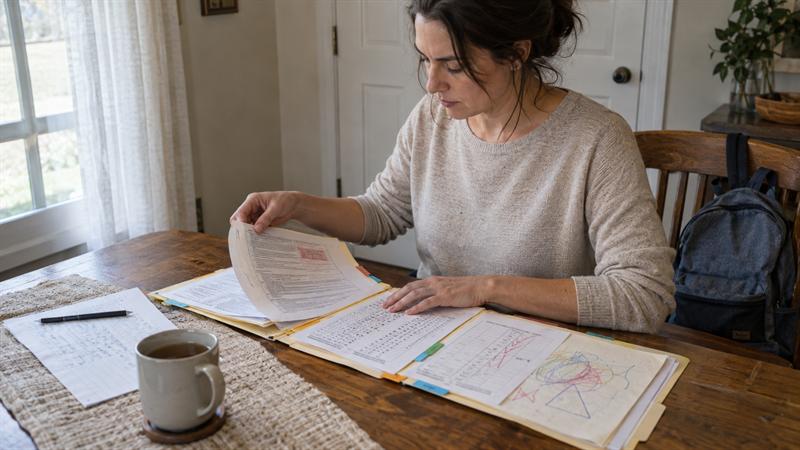
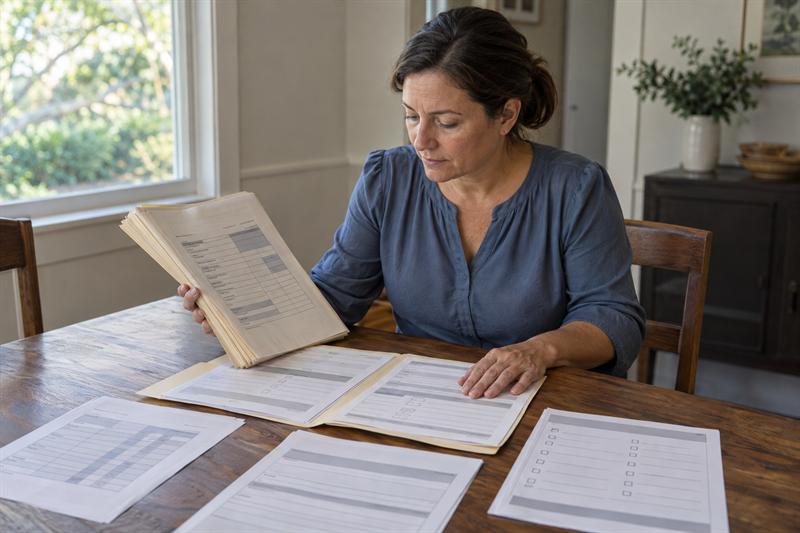
At Carolina Anchor Psychological & Educational Consulting, this question usually comes up at transition points. A family has a report from a few years ago, a school meeting is approaching, or a college office is asking for documentation, and suddenly it is not clear whether the evaluation is still enough.
The most important distinction is straightforward. A report can still be useful without being sufficient for every decision. That is where many families get stuck, and it is often where delays begin.
What People Usually Mean by “Current”
When people ask how current a psychoeducational evaluation is, they are usually asking two questions at once: Does this report still help explain the student? And will this report still work for the school, college, or testing office reviewing it now?
Those are different questions. An evaluation can remain very helpful for understanding a student’s history, learning patterns, and earlier recommendations, but still fall short when a school or college needs clearer information about present-day functioning.
Useful for understanding history vs. sufficient for formal decisions
Historical data still matters. It can show long-standing attention difficulties, a stable learning disability profile, or a pattern of uneven academic skills that has continued over time.
Formal decisions often require more than that. Schools and colleges are usually trying to understand what the student needs now, in the current environment, with current expectations. This is where problems can start if families assume an older report automatically answers both questions.
Why there is not always one universal expiration date
There is not one universal rule because the purpose of the report matters. A school team reviewing support needs, a college disability office reviewing accommodations, and a family trying to make sense of a student’s struggles are not all using the document in the same way.
This is a common source of confusion. A family hears that a report is “too old,” but the real issue is often more specific: the report may still be informative, but it does not describe the student’s current level of functioning well enough for the decision being made.
When an Older Psychoeducational Evaluation May Still Be Helpful
An older psychoeducational evaluation can still be very useful, especially when the core learning or attention profile has been consistent. Older reports often provide a clear starting point for understanding what has been happening over time.
A common pattern is that families return to an evaluation only when support is being revisited. At that point, the report can still provide valuable history, even if an update is eventually needed.
- It can show long-standing learning, attention, or processing patterns.
- It can help explain why certain supports were recommended in the first place.
- It can provide background for school meetings, transition planning, or college preparation.
- It can help focus a future reevaluation instead of starting from scratch.
Recognizing long-standing patterns in learning or attention
Some findings remain meaningful over time. If a report documented clear patterns in reading, written expression, attention, processing, or academic fluency, those findings may still help explain the student’s experience years later.
This matters most when the older report shows a pattern that has continued across settings and school years. The value is not just in the scores. The value is in the pattern.
Providing background for school meetings or college planning
Older reports can help everyone get oriented quickly. They show what concerns were present, what was evaluated, and what recommendations were made when the student was previously assessed.
That can make school meetings and planning conversations more productive. Instead of trying to reconstruct everything from memory, families can use the report to ground the discussion. For readers trying to make sense of an existing report first, this guide on how to read a psychoeducational evaluation report in plain language may help clarify what the document is saying.
Supporting the need for a more focused update
An older evaluation can also show what is already well documented and what still needs to be clarified. That matters because not every next step needs to repeat the same questions.
This often shows up when students reach a new transition point. The old report still explains the original concerns, but the new question is different. In that situation, the report can help shape a more focused update. Families who want a clearer picture of what that process looks like can review the psychoeducational evaluation process from intake meeting to feedback session.
When Updated Testing May Be Needed
Updated testing is often needed when the old report no longer answers the current question clearly. That can happen when the student has changed, the educational setting has changed, or the documentation request is asking for a more current picture.
A common problem is delay. A family submits an older report, assumes it will be enough, and then loses time when a school or college asks for more. By then, deadlines, accommodation decisions, or support planning may already be moving.
- There has been a major school transition.
- Academic performance, attention, or emotional functioning has changed noticeably.
- The current recommendations no longer fit the student’s setting or workload.
- A school, college, or testing office has asked for updated documentation.
Major developmental or educational transitions
Transitions are one of the biggest reasons older evaluations stop being enough on their own. Moving into middle school, high school, college, or another more demanding environment changes what the student is being asked to manage.
This can become more noticeable when the old recommendations were built for a very different level of independence or workload. A report that made sense at one stage of school may not fully address the next one.
Changes in academic performance, emotional functioning, or support needs
If grades have dropped, effort has increased sharply, attention concerns have become more obvious, or emotional stress is affecting school performance, the earlier evaluation may no longer capture the full picture. The issue is not just time passing. The issue is that the student’s presentation now looks different from what was documented then.
This often creates confusion when families assume the original findings should still explain everything. Sometimes they do. Sometimes the current picture has become more complex, and that may mean a new layer of interpretation is needed.
Requests from schools, colleges, or testing agencies for more recent documentation
Sometimes the clearest reason for updated testing is procedural. The reviewing institution wants documentation that reflects current functioning in the present setting.
The key mistake here is treating the request as arbitrary. In many cases, the school or college is trying to understand present limitations, present demands, and present accommodations. If the report does not address those clearly, that often leads to requests for more information.
If you are seeing any of the following, it may be time to act:
- The school says the report is helpful but not enough for the current decision.
- A college office is asking for documentation tied to current academic impact.
- The student’s functioning has changed since the last evaluation.
- The recommendations in the old report no longer fit the student’s current setting.
When those signs are present, relying on the old report alone can lead to delays, incomplete support planning, or documentation that does not match the current need.
School Versus College: Why Documentation Expectations Can Differ
School and college settings are not looking for exactly the same thing. That difference is one of the main reasons families feel confused when an older report worked in high school but raises questions during the college transition.
A common pattern is that a family assumes the report should transfer cleanly from one setting to the next. The setting changes, the expectations change, and the documentation question changes with them.
K-12 supports and school-based decision making
In K-12 settings, school teams often review multiple sources of information together. Existing records, classroom performance, teacher input, and prior evaluations can all help build the picture.
That means an older evaluation may still have meaningful value in school-based planning. It can support conversations about patterns, needs, and prior recommendations, even when additional data is also considered.
College disability services and evidence of current functional impact
College disability services offices are typically focused on current functional impact in a postsecondary environment. The question becomes more specific: how is this issue affecting academic access now, in the present college setting?
This is where older reports often start to feel incomplete. They may describe a valid history, but the documentation may need to connect that history to current college demands such as reading load, independent organization, written output, or test-taking expectations.
Why a report that helped in high school may not answer every college question
A report that supported accommodations in high school was not necessarily wrong or weak. It was answering the question being asked at that time. College may be asking a different question now.
This is the distinction that usually matters most. The issue is not whether the old report was valid then. The issue is whether it fully explains present limitations and present accommodation needs in the current setting.
Questions to Ask Before Assuming You Need a New Evaluation
Before assuming a full reevaluation is necessary, it helps to identify the exact gap. The goal is not to create more uncertainty. The goal is to understand what the current decision requires.
- What is the evaluation being used for right now?
- What has changed since the last evaluation?
- What specific documentation request has the school or college made?
- Does the existing report already answer part of that request?
What is the evaluation being used for?
The purpose matters first. A report used for general understanding, school planning, formal accommodations, or college disability documentation is not being asked to do the same job every time.
If the use is narrow and the report already answers that question clearly, the older report may still be enough. If the use is formal and depends on current impact, that often changes the answer.
What concerns are still the same, and what has changed?
If the same learning or attention profile is still showing up in the same way, the older report retains more practical value. If the student’s functioning now looks different, the old report becomes less reliable as a stand-alone document.
This is where families often need to be honest about the shift. A student who is now struggling with independence, heavier workload, emotional strain, or more obvious attention problems is not presenting in the same way, even if the earlier diagnosis still appears relevant.
What documentation requirements has the school or college actually given you?
The fastest way to lose time is to guess. If the school or college has given specific requirements, those details matter more than assumptions about what “should” count.
Many delays start here. Families submit what they have, wait for a response, and then learn the real issue was missing evidence of current functioning. Reviewing the request carefully at the start usually makes the next step clearer.
What a Focused Update or Reevaluation Can Add
A focused update or reevaluation is not just about getting a newer date on a report. It is about answering the current question clearly enough that the document is useful in the present setting.
That difference matters. When the right question is tested and interpreted well, the new evaluation does more than refresh old findings. It helps sharpen the next decision.
Updated data on current functioning
Current data shows how the student is functioning now, not how they were functioning at an earlier stage of development or schooling. This is often the missing piece when older reports are challenged or only partially accepted.
The practical value is direct. Updated data helps explain present strengths, present barriers, and how current academic demands are affecting performance.
Revised recommendations tied to present demands
Recommendations work best when they fit the environment the student is actually in. A recommendation that made sense in earlier grades may no longer fit a heavier course load, different classroom structure, or greater independence.
This often shows up when students move into a more demanding academic stage. The recommendations are not necessarily wrong. They may simply no longer be specific enough for current demands.
Clarification when prior findings no longer fully explain the current picture
Sometimes the earlier evaluation was accurate, but incomplete for what is happening now. New concerns, more visible limitations, or a different academic context can bring out questions that were not central the first time.
That usually means the goal is not to replace the earlier report entirely. The goal is to clarify what has stayed the same, what has changed, and what that now requires.
How Independent Educational Evaluations Fit In
An independent educational evaluation can be relevant when families need a clearer outside perspective on whether prior school-based information is enough or whether the current situation needs a more complete review. This can be especially important when the question is no longer just “what did the old report say?” but “what does the student need now?”
For families weighing that option, this family checklist for considering an Independent Educational Evaluation (IEE) can help clarify when an independent review makes sense.
When families may consider an IEE
- There are unresolved questions about whether the existing documentation is sufficient.
- The school-based picture does not seem to explain the student’s current struggles fully.
- A transition or disagreement has made independent clarification more important.
In those cases, the issue is usually not just the age of the report. The issue is uncertainty about what the current educational picture actually shows.
How an independent perspective can help clarify next steps
An independent perspective can help sort out whether an older evaluation still answers the current question, whether a focused update is enough, or whether a fuller reevaluation is needed. That clarity matters because the wrong assumption can lead to wasted time and documentation that does not fit the situation.
At Carolina Anchor Psychological & Educational Consulting, the starting point is the question that needs to be answered now. The goal is to understand what the student needs in the present setting, what the existing records still explain well, and where the actual gap begins.
Key Takeaways
- An older psychoeducational evaluation can still be useful for history, patterns, and context.
- The real question is whether it still answers the current school or college documentation need.
- Transitions, changed functioning, and updated accommodation requests are common reasons older reports stop being enough on their own.
- If the report explains the past well but not the present clearly, updated testing is often the next practical step.
Conclusion
The real problem is not that a psychoeducational evaluation gets old. The real problem is that families are often asked to use an older report for a newer question, and that is where documentation gaps, delays, and support problems begin.
If that gap is not addressed well, schools and colleges may end up working with incomplete information. That can lead to slower decisions, unclear accommodation planning, or a report that still explains the student’s history but no longer supports what needs to happen next.
Carolina Anchor Psychological & Educational Consulting can be a practical next step when an older evaluation still seems helpful but no longer seems complete. The focus is on current functioning, current educational demands, and the kind of documentation that can move the situation forward. If you are trying to decide whether an existing report is still enough, review the available assessment services or get in touch to clarify what the current situation requires.
FAQ
Can a school still use an older psychoeducational evaluation?
Yes. A school can still use an older psychoeducational evaluation when it helps explain the student’s learning history, established patterns, or prior recommendations. Older reports are often still useful for context.
The key distinction is what the school needs the report to do. If the school is trying to understand long-standing concerns or review prior supports, the older evaluation may still be very helpful. If the school is making a current decision about services, accommodations, or planning, it usually also needs information that reflects how the student is functioning now.
What commonly gets misunderstood is that older does not mean irrelevant. It usually means the report is one piece of the picture rather than the whole answer.
How long is a psychoeducational evaluation usually considered valid for college accommodations?
There is not one universal answer because colleges are typically looking for documentation that shows current functional impact in a college setting. The issue is less about a single expiration rule and more about whether the report still explains present academic limitations clearly.
For example, a report from high school may still document a long-standing attention or learning issue accurately. But if it does not explain how that issue currently affects reading load, written work, organization, or test-taking in a college environment, it may not answer the question the college is reviewing.
The most important point is that a report can still be informative without being complete enough for a college accommodations decision.
Does a psychoeducational evaluation expire, or does it depend on the situation?
It depends on the situation. A psychoeducational evaluation is better understood in terms of usefulness and fit, not just age.
An older report may still explain a student’s history very well. But if the school, college, or testing office needs evidence of current functioning, the older report may stop being enough on its own. This is where people get tripped up by the idea of expiration.
What matters most is whether the report still answers the present question clearly. If it does not, that is what drives the need for updated information.
What if the old evaluation still explains the student well, but the school wants newer documentation?
If the old evaluation still explains the student well, it still has value. The school’s request for newer documentation usually means it needs clearer evidence of how the student is functioning now, not that the earlier report is useless.
A common example is when an older report clearly documented a learning or attention concern, but the school now needs to understand how that concern is affecting the student in the current classroom setting or workload. In that case, the older report still helps with history, but it does not fully answer the current question.
The main distinction is between explanation and decision support. The old report may still explain the student. Newer documentation is what supports the present decision.
Do changes in grades, attention, or emotional functioning mean updated testing is needed?
Often, yes. Noticeable changes in grades, attention, emotional functioning, or support needs are among the clearest signs that an earlier evaluation may no longer capture the full picture.
For example, a student who managed reasonably well with earlier supports may start struggling once coursework becomes heavier or independence demands increase. When that happens, the old report may still describe the original profile accurately, but it no longer explains the current level of difficulty well enough.
What changes the decision is not just the passage of time. It is the shift in functioning. When the student’s current presentation looks different, updated interpretation is often needed.
When should a family consider an independent educational evaluation instead of relying on an older report?
A family may consider an independent educational evaluation when the older report no longer seems sufficient, the current picture is unclear, or there are unresolved questions about whether existing school-based information reflects what is happening now.
This often comes up during transitions, after persistent school concerns, or when existing documentation provides history but not enough clarity for current planning. In those situations, the independent evaluation is not just a replacement for an older report. It can be a way to clarify what the present situation actually requires.
The distinction that matters most is this: if the old report gives background but not direction, an independent evaluation may become much more relevant.