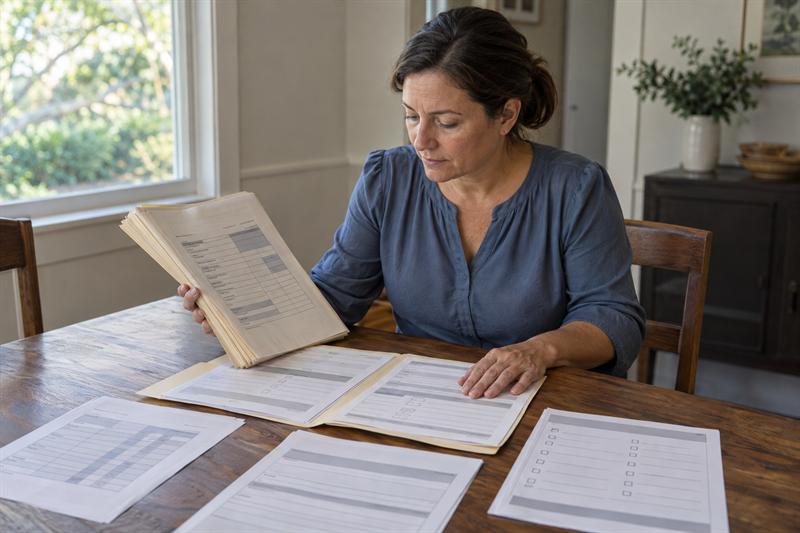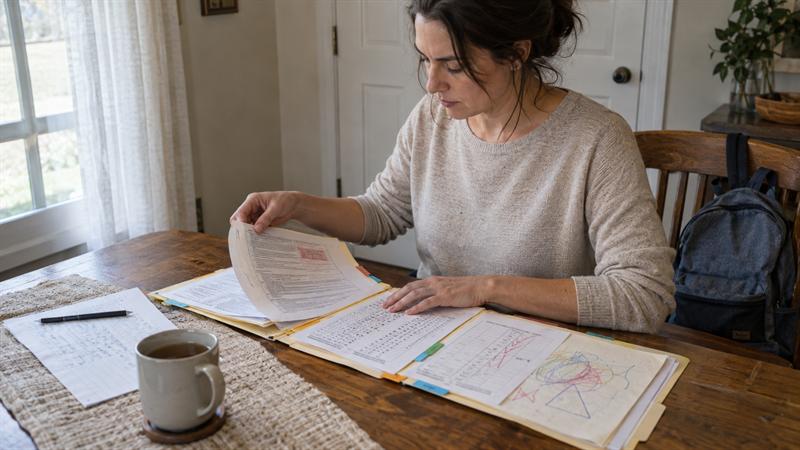

Most families start gathering records for psychoeducational evaluation after a school meeting, a run of report cards that no longer add up, or a conversation with a pediatrician. The documents usually arrive in a bag: loose report cards, a folder of emails, an old evaluation nobody has opened in years. What the evaluator receives, and how quickly it can be read, shapes the questions the testing is built to answer.
The list below is not a test to pass. It is a way to reach the intake meeting with the history already in hand, so that appointment time goes toward the student rather than the paperwork. Carolina Anchor Psychological & Educational Consulting reviews records for children, adolescents, and young adults, and the same organizing principles apply whether the evaluation is a first one or a second opinion.
Why Records Carry So Much Weight in an Evaluation
Testing describes how a student performs on a given morning. Records describe the years that came before it. A single score can shift with sleep, anxiety, hunger, or an unfamiliar examiner. A folder of report cards, attendance notes, and intervention logs shows whether a difficulty is new, seasonal, or long-standing.
That pattern also shows what has already been tried. A student who received small-group reading support for two years while the gap held steady is in a different position from a student who has never been screened. The practice evaluates children, adolescents, and young adults for learning disabilities, autism spectrum disorder, ADHD, memory and learning challenges, and mood disorders including anxiety and depression. In each case, the file is what separates a snapshot from a history.
The Core Records Most Evaluations Need
A small core set covers most referrals. It is worth assembling these first, before hunting for anything unusual, because they answer the opening round of questions on their own.
- Report cards and transcripts, including teacher comments rather than grades alone.
- Attendance records, which show whether missed days track with missed work.
- School intervention and support documentation, such as tutoring logs, reading group notes, or behavior plans.
- Medical and developmental history, including milestones, diagnoses already made, and any medications.
- Prior evaluations and reports from outside providers.
- The questionnaires or rating forms the practice sends before the appointment, completed by a parent and, when possible, by a teacher.
If a document cannot be found, note it rather than reconstructing it from memory. A missing record is useful information. A summary written years later is not the same thing.
School Records: What to Ask For and Why
Ask the school for the full academic file, not only the current year. In practice that means report cards with comments, state and district test results, IEP or 504 documents, intervention and tutoring data, behavior or discipline records, and any screening results the school has run.
Teacher comments often carry more signal than the grades beside them, because they describe habits: unfinished work, slow starts, a student who reads fluently but cannot summarize. The pattern across several years matters more than any single page, and a file that shows three consecutive years of the same comment is easier to interpret than one strong semester. The practice describes the order of appointments and record collection in the five-stage evaluation process, from intake meeting to feedback.
Medical, Developmental, and Outside Provider Records
Medical records fill in what schools do not see: pediatric visit summaries, vision and hearing screening, medication lists, and specialist reports. A vision problem corrected two years ago belongs in the file, because it may explain an older dip in reading scores and keeps that dip from being read as a learning pattern.
Summaries from outside therapy, tutoring, or speech and occupational therapy are worth including as well. Which areas the practice assesses depends on the referral question, so a short note about who has been working with the student, in what setting, and for how long helps the evaluator decide where to look first.
Prior Evaluations and Reports From Other Settings
An earlier evaluation is still evidence, even when its conclusions no longer fit. Include prior school or private evaluations, earlier independent educational evaluations, and speech or occupational therapy reports, each with the date it was completed.
Families sometimes hesitate to hand over a report they disagreed with. Bring it anyway, and say so. A documented disagreement, followed by concerns that never resolved, is part of the history the new evaluation has to explain. The practice’s guidance on how to prepare your child or teen for a psychoeducational evaluation covers the appointment itself; the older report is background for it.
How to Organize Records Before the Appointment
The order of the file matters less than its consistency. Four steps cover most of it.
- Write a one-page chronology: developmental milestones, school changes, the first year a concern appeared, and each evaluation or intervention since.
- Group documents by type, such as academic, medical, prior testing, and outside services, rather than by date alone.
- Include complete documents. A single page pulled from a report loses the context that made it meaningful.
- Attach a short list of open questions, written in plain language, that the family wants answered.
Digital copies are usually easier to share and to search, and paper is fine when that is what exists. Send the set once, early enough to be read, rather than in pieces across the weeks before testing. This is also the point at which the records for psychoeducational evaluation stop being a pile of paper and become a working file.
What to Leave Out
Volume works against clarity. Duplicates, screenshots of portal messages, and commentary about individual teachers or administrators add length without adding evidence. Leave out anything that is not connected to the referral question, along with personal assessments of the adults involved. A concise set that an evaluator can read in one sitting is more useful than a complete set that arrives in fragments.
When the Evaluation Is an IEE, the Record Set Changes
An independent educational evaluation is requested when a family disagrees with a district evaluation, and the file grows to include the district’s side of the story: its evaluation, eligibility documents, prior written notices, meeting notes, and progress reports.
In plain terms, when parents disagree with a district evaluation, the district must either fund the IEE without unnecessary delay or file for due process. Parents are entitled to one publicly funded IEE per disputed evaluation, and the school must consider an IEE that meets its criteria when deciding services. Criteria for qualifications, location, and scope vary by district, so ask for the policy in writing before assuming that a provider or a proposed scope qualifies. A family checklist for considering an independent educational evaluation covers the decision itself, and the practice’s page on independent educational evaluations describes what an IEE can include.
When Records Are Missing or Slow to Arrive
Not every document will be available before the first appointment. Schools sometimes require a written request before releasing a file, and a family that has moved districts may be missing whole years. Say so at the intake meeting instead of delaying the evaluation indefinitely.
The evaluator can work with a partial file, and the missing pieces can be added later or addressed in the interview. What matters is that the gaps are named rather than filled in from memory. A record request sent in writing, with the specific documents listed, usually moves faster than a general ask for the student’s file.
Key Takeaways
- Records supply the history that a single testing session cannot.
- Report cards with comments, attendance, and intervention notes show patterns across years.
- Medical, developmental, and outside provider summaries explain what schools do not see.
- Prior reports add history even where their conclusions no longer apply.
- A one-page chronology and complete documents make the file easier to read and use.
Next Steps
Carolina Anchor Psychological & Educational Consulting works with children, adolescents, and young adults, in person in Mount Pleasant, SC, and by telehealth across South Carolina. Appointments are scheduled in advance. A full evaluation typically takes four to six hours, often across one or two morning appointments, followed by a feedback meeting about two weeks after testing and a written report with recommendations for home, school, and future planning.
Dr. Renee Lake holds a Ph.D. in School Psychology from The Ohio State University and has 25 years of post-graduate experience across private practice, residential treatment settings, and public and private schools. A free initial consultation is available at 3003 Dunes West Boulevard, Suite #5, Mount Pleasant, SC 29466, by phone at (843) 256-6814, or by email at lake@carolinaanchor.com. Contact the practice to ask which records apply to a particular referral question.