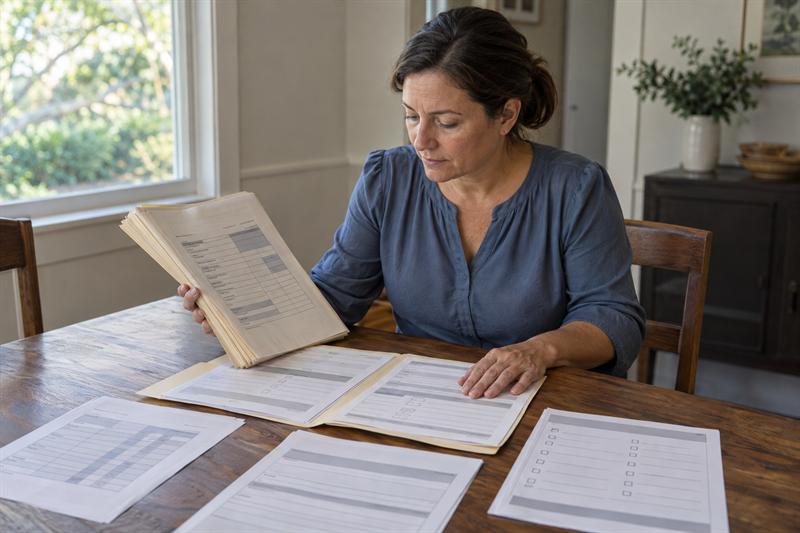

Families often begin this process with report cards, school emails, old testing, and portal downloads, but no clear sense of what matters most. At Carolina Anchor Psychological & Educational Consulting, that is a common starting point before a psychoeducational evaluation: plenty of information, but not yet organized in a way that helps clarify the referral question, school history, or support history.
If the goal is clarity, the records need to do more than fill a file. They need to show what concerns have looked like over time, what has already been tried, and where questions still remain. That is what helps an evaluation move from a broad concern to a more useful understanding.
Why records matter before a psychoeducational evaluation
Records matter because testing is only one part of the picture. School documents, prior reports, and parent observations help show how concerns developed, whether they have stayed consistent, and how they tend to shift as academic demands increase.
This is where many families get stuck. They assume the evaluation starts on the testing day, when record review often helps shape what needs closer attention. For a fuller view of that process, see the psychoeducational evaluation process from intake meeting to feedback.
What records can show that testing alone cannot
Records can show classroom performance across months or years, not just performance during one appointment. They also show how a student responded to interventions, accommodations, tutoring, or changes in support.
- Day-to-day academic functioning
- Teacher concerns that repeat over time
- Whether supports helped, helped only a little, or stopped helping
- Differences between school performance, home concerns, and prior findings
A common pattern is that a student’s grades look acceptable, but teacher comments, accommodation history, or rising frustration tell a different story. That can suggest the concern is being managed through effort, support, or compensation rather than fully resolved.
How records help identify patterns across time, settings, and supports
Older records are often more helpful than families expect. They can show when reading, attention, writing, language, or executive functioning concerns first became visible and whether those concerns changed as the work became more demanding.
This is where the picture usually starts to sharpen. If the same issue shows up in different grades, with different teachers, or across multiple kinds of support, that often points to a persistent pattern rather than a short-term struggle. If that pattern is overlooked, school demands can continue to rise while the underlying concern remains unclear.
The most helpful records to collect
The most helpful records are the ones that make the student’s history easier to understand. The goal is not to gather everything. It is to gather what clearly explains the concern, the school response, and the support history.
Families often do best when they think in categories instead of institutions. That keeps the file focused and makes the record review easier to follow.
Report cards and progress reports
Report cards and progress reports show academic performance over time, but they also add important context. Teacher comments can reveal patterns in work completion, attention, independence, frustration tolerance, reading fluency, writing output, or classroom behavior.
For example, a student may be passing, but comments keep pointing to slow work pace, uneven focus, weak organization, or increasing difficulty in one subject area. That can mean the grades alone are not telling the full story.
Prior school testing and outside evaluations
Prior school evaluations, psychoeducational testing, speech and language evaluations, occupational therapy reports, and related outside assessments are often some of the most useful records to include. They show what questions were already asked, what conclusions were reached, and what recommendations were made.
They can also show what still remains unclear. If a prior report raised attention concerns, reading weaknesses, language processing issues, or executive functioning difficulties, that history can help shape the next evaluation question instead of starting from zero.
IEPs, 504 plans, eligibility paperwork, and accommodation history
These records show what support has already been in place and how the school has understood the student’s needs. They often matter as much as grades because they show the conditions under which the student has been working.
If a student is doing better only with extra time, reduced workload, reading support, or classroom accommodations, that is part of the story. Support history can help explain whether a concern has improved, stayed the same, or become harder to manage over time.
Standardized test scores and school performance data
Benchmark data, reading screeners, district testing, and other school performance measures can help show whether classroom performance matches skill development. Sometimes they align. Sometimes they do not.
When scores and classroom grades tell different stories, that can signal the need for a closer look. This is where uneven skill development, hidden learning strain, or a support-dependent pattern may become easier to recognize.
Teacher notes, behavior reports, and communication from school
Emails, conference notes, behavior reports, and documented school concerns can be highly useful when they describe what daily functioning actually looks like. They often provide a direct picture of what teachers are seeing in real time.
This type of information is easy to overlook because families do not always think informal communication counts as a record. Repeated teacher observations can help clarify whether a concern is occasional, situational, or consistently affecting classroom performance.
Relevant medical, developmental, therapy, or tutoring records
Include records that help explain learning, attention, communication, developmental history, or emotional functioning as they relate to the referral question. Not every outside document adds value.
A useful distinction is relevance. A tutoring summary that shows persistent reading difficulty is likely more informative than a large folder of unrelated medical paperwork. When records are too broad, the key issue can become harder to see.
Parent observations and concerns
Parent notes help connect the records to the real concern. Brief observations about when problems started, what settings are hardest, what strategies helped, and what questions still need answers can make the file more useful.
This is especially important when formal records are incomplete. A short written summary can help explain patterns such as homework taking far longer than expected, rising frustration, uneven independence, or attention problems that became more obvious as school demands increased.
What if some records are missing?
Missing records do not usually stop the process. What matters most is starting with the documents that best explain the current concern and the support history.
Waiting for the perfect file often creates a bigger problem. The evaluation gets delayed, school demands continue, and the same unanswered questions keep affecting performance. In many cases, it makes more sense to begin with the core records and add the rest as they become available.
Which records are most important to prioritize
- Recent report cards or progress reports
- Any prior evaluations or testing reports
- Current IEP or 504 plan, if applicable
- Key school communication related to the main concern
If those four areas are available, there is often enough to start seeing the structure of the concern. When they are missing, the story can be harder to interpret and important context may be lost.
How to move forward without delaying the process unnecessarily
Start with the records already available, then make a list of the ones still missing. That keeps the process moving and makes it easier to see what gaps still need to be filled.
A common pattern is that families keep waiting because one evaluation, one meeting note, or one school file is still pending. That can create more delay than benefit. A practical next step is to send the core records first, then add missing items once they arrive.
If any of these signs sound familiar, it may be time to move forward:
- School concerns have been repeating across more than one year
- Supports are in place, but the same problems keep returning
- Grades look acceptable, but effort, stress, or daily struggle keeps rising
- There are prior reports, but no clear sense of what they mean together
When those patterns are present, the issue is often not a lack of effort. It is a lack of a clear, organized picture.
How to organize records for the evaluation
Good organization helps the evaluation start from the right place. Without it, important records can get buried, timelines can become unclear, and the same information may need to be pieced together later.
This is one of the simplest ways to reduce stress before the appointment. Families preparing both paperwork and the day itself may also find it helpful to read how to prepare your child or teen for a psychoeducational evaluation.
A simple folder system families can use
- School records
- Prior evaluations
- IEP or 504 documents
- Outside therapy or tutoring records
- Parent notes and questions
This can be digital or paper. What matters is that the records are easy to review and clearly labeled by type and date.
How to group documents by school year or concern area
Grouping by school year works best when the main question is how the concern changed over time. Grouping by concern area works best when the records are scattered across different sources and the goal is to compare reading, attention, behavior, writing, or support history more directly.
The best structure is the one that makes the story easiest to follow. If the records are hard to track, the pattern can be harder to interpret.
What to send ahead and what to bring to the appointment
Send the core records ahead of time whenever possible. That gives the evaluator time to review the history before testing begins.
- Send report cards, prior evaluations, and support plans in advance
- Bring any key records that were not available earlier
- Include a short note listing missing documents that are still being requested
This often leads to a more focused start. When records arrive late or in no clear order, important context may come in too late to guide the evaluation from the beginning.
Records that may be especially important for an IEE
For an independent educational evaluation, school-based records often carry even more weight because they help clarify what the school concluded, what support decisions followed, and where disagreement or uncertainty developed. These are not just background documents. They are often central to the question being asked.
Families working through that decision point may also benefit from a family checklist for considering an independent educational evaluation.
School evaluation reports and eligibility decisions
School testing reports, eligibility decisions, and meeting summaries help show how the student was assessed and how those findings were interpreted. They also show what conclusions the school reached about services, supports, and educational need.
If those records are missing, it can be harder to understand whether the issue is disagreement with the findings, concern about the scope of the evaluation, or confusion about how the school reached its decision.
Documentation connected to disagreements, denied services, or unclear findings
When school conclusions and family concerns do not match, records tied to that gap become especially important. That can include written explanations, meeting notes, prior recommendations, or records showing that concerns remained despite support or intervention.
This is where confusion tends to build. Without those records, the disagreement often stays broad and hard to define. With them, the actual point of concern can become clearer.
Common mistakes families make when gathering records
Most record problems are not about effort. They are about missing structure, missing context, or assuming that only the most recent paperwork matters.
In many cases, families have done a great deal of work gathering documents, but a few key omissions or organization issues can still make the picture harder to understand than it should be.
Bringing too much without organizing it
More records do not automatically mean better preparation. When everything is included without dates, categories, or priorities, the most useful information can get buried.
This usually results in extra time spent sorting instead of interpreting. A smaller, organized file is often much more useful than a large unsorted stack.
Leaving out prior evaluations or accommodation history
These records often explain what has already been considered and what supports were needed to keep things working. Leaving them out removes context that can change how current concerns are understood.
If the same issue has already been identified, supported, or monitored, that history matters. Without it, the record review may miss how long the problem has actually been developing.
Assuming only recent records matter
Recent records are important, but older records often show the beginning of the pattern. That is especially true when academic demands have changed and the student’s difficulties became more obvious over time.
If older records are ignored, the concern can look newer or more isolated than it really is. That can lead to a flatter, less accurate understanding of the student’s history.
Key Takeaways
- The best records for a psychoeducational evaluation are the ones that show patterns over time, not just isolated snapshots.
- Core records usually include report cards, prior evaluations, current support plans, and school communication tied to the concern.
- Older records can be important when they show how reading, attention, writing, language, or executive functioning concerns developed.
- Good organization matters. A clear file is more useful than a large, unsorted one.
- If some records are missing, it is usually still possible to move forward with the core documents first.
Conclusion
The real problem is rarely just a missing document. The bigger issue is going into a psychoeducational evaluation without a clear record of what has been happening, what supports were tried, and how the concern has changed over time. When that history is incomplete or disorganized, the evaluation starts with less clarity and the same confusion often continues.
At Carolina Anchor Psychological & Educational Consulting, the focus is on helping families move from scattered information to a clearer understanding of the referral question, the school history, and what the records are actually showing. When concerns have been building, repeating, or becoming harder to explain, a thoughtful review of the right records is often a practical next step. Learn more about available evaluation services at Carolina Anchor Psychological & Educational Consulting services.
Company Approach
Carolina Anchor Psychological & Educational Consulting approaches records as part of the evaluation story, not as paperwork to collect for its own sake. That means looking for patterns across years, noticing where school performance and daily effort do not fully match, and paying attention to what previous supports did or did not change.
This approach matters because records often answer a different question than testing alone. They help show whether a concern is persistent, whether it became more noticeable as demands changed, and whether the student has been holding things together through support, compensation, or increasing strain. That is often where the most useful next step becomes clearer.
FAQ
Do I need every school record before scheduling a psychoeducational evaluation?
No. The most important step is gathering the records that explain the current concern, the support history, and any prior conclusions. Recent report cards, prior evaluations, and current school support plans are usually more important than trying to collect every document before getting started.
A common misunderstanding is that one missing file makes the process premature. In many cases, delay creates the bigger problem because the same school concerns continue while the picture stays unclear.
Are report cards and teacher comments really useful for a psychoeducational evaluation?
Yes. They often show the daily impact of a concern more clearly than families expect. Teacher comments can reveal patterns in work pace, attention, writing output, reading stamina, organization, and frustration that grades alone do not show.
For example, a student may be earning acceptable grades while repeated teacher comments point to slow completion, uneven focus, or heavy support needs. That distinction matters because it shows how the student is functioning, not just the final grade.
What records are most important if my child already has an IEP or 504 plan?
The current IEP or 504 plan, older versions if available, eligibility paperwork, and records showing accommodation or service history are usually the most important. These documents show how the school has defined the concern and what support has already been tried.
That history changes how current performance should be understood. If a student is functioning only with accommodations in place, the support context is part of the concern, not separate from it.
Should I include outside therapy, tutoring, or medical records?
Include them when they directly relate to learning, attention, communication, developmental history, or emotional functioning tied to the referral question. Relevance matters more than volume.
A tutoring summary showing persistent reading difficulty or a speech and language evaluation tied to academic concerns is often useful. A large set of unrelated medical records usually adds less because it does not help clarify the educational question.
How far back should records go for a psychoeducational evaluation?
They should go back far enough to show when the concern started, how it changed, and what happened when supports were introduced or demands increased. Recent records are usually the starting point, but older records often explain the pattern more clearly.
This is commonly misunderstood. A concern that looks recent in middle school or high school is often visible much earlier in comments, support history, or prior testing.
What records are especially helpful when requesting or preparing for an IEE?
School evaluation reports, eligibility decisions, meeting documentation, and records connected to support recommendations or disagreements are especially important for an IEE. These records help clarify what the school concluded and where the concern remains unresolved.
That distinction matters because an IEE-related record set is not just about symptoms or grades. It is often about understanding how prior school-based decisions were made and what information shaped them.