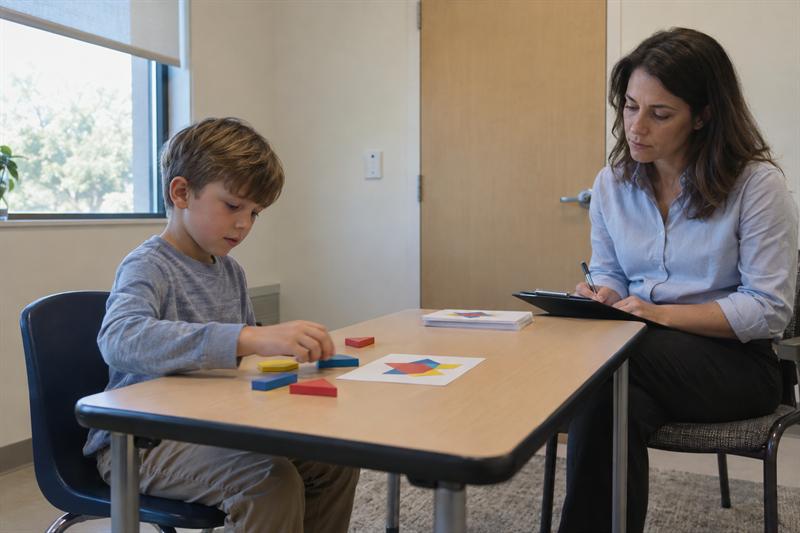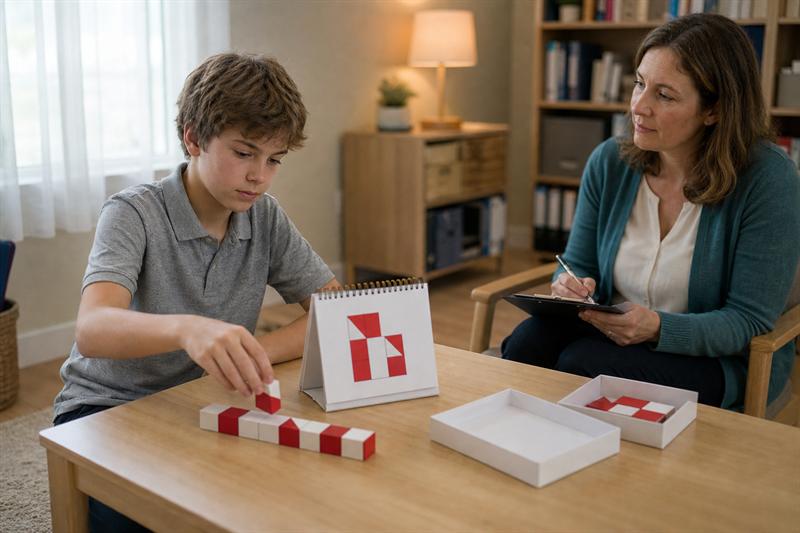

When comparing psychological and psychoeducational evaluations, start with what you need to understand. You might be concerned about reading progress, attention, emotional distress, behavior, or several difficulties that seem connected.
Carolina Anchor Psychological & Educational Consulting offers both evaluation types for children, adolescents, and young adults. You do not need to select the exact tests yourself. A useful first step is to identify your concerns and the decisions you hope the findings will inform.
The Short Answer: Different Emphases, Overlapping Questions
A psychological evaluation investigates emotional, behavioral, developmental, or cognitive functioning. A psychoeducational evaluation focuses on learning and educational functioning, typically examining academic skills alongside other relevant areas. Both can assess attention, behavior, and emotions. The main difference is the evaluation’s emphasis, not a strict separation between mental health and learning.
Providers do not use these labels identically. “Psychological” does not necessarily mean mental health only, and “psychoeducational” does not mean academics only. The assessment’s scope tells you more than its name.
How Psychological and Psychoeducational Evaluations Compare
Compare the questions asked, the areas assessed, the information gathered, and the intended use of the findings. In either evaluation, the evaluator interprets information from multiple sources rather than relying on a single score.
Psychological Evaluation: Scope Follows the Referral Question
A psychological evaluation is organized around the referral question: what the individual, family, or referring professional wants to understand. An assessment focused on emotional functioning will not necessarily include the same measures as one investigating developmental or cognitive concerns.
- Primary questions: What contributes to difficulties in emotional, behavioral, developmental, or cognitive functioning? Are diagnostic conclusions or additional referrals warranted?
- Areas assessed: Relevant areas might include mood, behavior, attention, thinking abilities, or everyday functioning. Academic achievement testing is not automatic.
- Information sources: Interviews, developmental history, observations, records, rating scales, and standardized measures selected for the referral.
- Potential uses: Understanding strengths and difficulties, supporting clinical decisions, informing treatment planning, and identifying further support.
The evaluator’s qualifications and methods matter alongside the service description. A broad label does not assure that every concern will be assessed or that every question will fall within the evaluator’s scope.
Psychoeducational Evaluation: A Focus on Learning and Educational Functioning
A psychoeducational evaluation investigates learning strengths, academic skills, and factors contributing to educational difficulties. It looks beyond grades to examine relevant abilities and functioning.
- Primary questions: Why is learning difficult? What are the individual’s strengths, and which skills or other concerns need support?
- Areas assessed: Academic achievement and cognitive abilities, with attention, executive functioning, emotional functioning, or behavior assessed when relevant.
- Information sources: Direct assessment, developmental history, school records, interviews, and caregiver or teacher input as appropriate.
- Potential uses: Understanding a learning profile, informing educational recommendations, and addressing diagnostic questions within the evaluator’s scope.
The guide to what is included in a psychoeducational evaluation explains these components in greater detail. Not every evaluation includes every area, and recommendations do not automatically establish eligibility for school services.
Where Learning, Attention, and Emotional Concerns Overlap
A visible difficulty does not reliably identify its cause. Learning demands, attention, and emotional functioning can interact, so an assessment focused on only one explanation may leave important questions unanswered.
- Reading avoidance alongside distress: In this hypothetical situation, both reading skills and the emotional response deserve consideration. Explaining avoidance only as a behavior problem leaves the learning question unanswered.
- Strong grades alongside organizational difficulties: A student might maintain good grades while needing substantial help to track and complete assignments. Grades alone do not show the effort or support required to manage those demands.
If academic struggles occur alongside distress or attention problems, describe both rather than selecting an evaluation by a suspected diagnosis. That combination calls for a discussion about how the assessment will investigate the overlap.
Clarify the assessment scope before committing to testing. Pay particular attention to the scope when:
- The service description does not clearly mention the academic skills causing concern.
- Learning difficulties and emotional or behavioral concerns occur together.
- A school, college, or testing organization needs particular documentation.
In these situations, bring the concerns and any documentation requirements into the planning conversation. The scope needs to be clear before testing begins.
How to Choose an Evaluation That Answers Your Questions
Use three points to guide the discussion: the question to answer, the scope of assessment, and the intended use of the report. This keeps the focus on useful information rather than choosing between labels.
Start With the Question You Want Answered
Describe the difficulty before assuming a diagnosis. Include where it happens, what has changed, and what support is already needed.
- Why is reading still difficult despite additional instruction?
- What explains trouble completing work when the material appears to be understood?
- How are emotional difficulties affecting learning and daily functioning?
Difficulties do not always look the same across settings. School records, prior reports, and observations from relevant people help clarify those differences. A concern that is less visible at school, for example, still deserves attention if it interferes with functioning at home.
Identify Who Will Use the Report
The intended recipient matters because different decisions require different information. An assessment for treatment planning does not automatically address every documentation requirement for educational accommodations.
- The individual or family: Understanding strengths, difficulties, and support needs.
- A treating professional: Informing clinical care or further assessment.
- A school team: Contributing to educational planning and eligibility discussions.
- A college or testing organization: Supporting review under its accommodation procedures.
A report can be useful for one purpose but lack information needed for another. Obtain relevant documentation requirements early and discuss them with the evaluator. This allows the intended use to inform assessment planning rather than becoming a concern after the report is completed.
Ask What Is Included Before Scheduling
Ask questions that clarify the assessment itself, the information you will receive, and its practical requirements.
- Which concerns and assessment areas will this evaluation cover?
- What qualifications and relevant assessment training does the evaluator have?
- What report, feedback, and recommendations are included?
- What are the fees and expected timing?
- How will prior evaluations inform the plan, and what might require additional assessment?
- Which activities require in-person appointments, and which are suitable for telehealth?
Previous testing does not automatically need to be repeated in full. Existing findings help identify what remains unanswered and whether additional assessment is needed. For an overview of the stages from initial discussion through results, review the psychoeducational evaluation process, from intake to feedback.
School Evaluations, Private Evaluations, and IEEs: A Separate Distinction
Evaluation type and evaluation context are different issues. “Psychological” and “psychoeducational” describe an assessment’s emphasis. School-based, private, and independent educational evaluations also involve questions about purpose, responsibility, and educational procedures.
A Diagnosis and Educational Eligibility Are Different Decisions
A clinical diagnosis does not automatically establish eligibility for an IEP or a Section 504 plan. Evaluation findings inform the discussion, but the school makes eligibility decisions based on the applicable educational framework. College accommodation processes follow different requirements.
A private evaluation is not a prerequisite for requesting a public-school evaluation. Public-school evaluations follow applicable rules, including IDEA’s Child Find provisions, which address identification and evaluation responsibilities. Private assessment is one option, not the only route to investigating educational needs.
An IEE Is Not a Third Fixed Test Battery
An independent educational evaluation, or IEE, is an evaluation conducted by a qualified examiner who is independent of the public agency responsible for the child’s education. It is not a universally prescribed set of tests. Its scope still needs to address the relevant educational questions.
Obtaining an independent evaluation and having a right to one at public expense are different matters. IDEA’s IEE rules address the applicable rights, procedures, and conditions. An outside evaluation contributes information; it does not guarantee a particular placement, accommodation, or service.
Evaluation Options in Mount Pleasant and Across South Carolina
Carolina Anchor Psychological & Educational Consulting offers psychological and psychoeducational evaluations for children, adolescents, and young adults, as well as IEE services. A free consultation provides a starting point for discussing concerns, intended report use, and service fit.
In-person access is available in Mount Pleasant, and telehealth is available across South Carolina. Not every testing activity is appropriate online; individual needs and assessment requirements determine suitability. Review Carolina Anchor Psychological & Educational Consulting’s evaluation services with your main questions in mind, rather than choosing solely by the evaluation label.
Frequently Asked Questions
Can a Psychoeducational Evaluation Assess Anxiety or Other Emotional Concerns?
Yes. A psychoeducational evaluation can include emotional and behavioral assessment alongside learning. Reading avoidance accompanied by distress, for example, raises questions about both academic skills and emotional functioning. An educational focus does not exclude emotional concerns, but the assessment’s scope determines which questions it addresses.
Does a Psychological Evaluation Always Include Academic Testing?
No. Direct assessment of reading, writing, or mathematics is not automatically part of a psychological evaluation. An assessment focused on emotional or behavioral functioning addresses different questions. When academic skill development is the concern, what matters is whether academic achievement testing is included.
Do You Need Both a Psychological and a Psychoeducational Evaluation?
Not necessarily. One evaluation with an appropriate scope can address overlapping learning, attention, and emotional questions. Other concerns may require additional assessment or a separate referral. Existing reports help establish what is already understood; unanswered questions matter more than whether both evaluation labels appear.
Will an Evaluation Guarantee an IEP, a 504 Plan, or College Accommodations?
No. An evaluation provides findings and recommendations, while the school or institution determines eligibility under the applicable framework. Clinical diagnosis and educational eligibility are separate decisions. College requirements also differ from K–12 processes, so a report can support a request without guaranteeing a particular outcome.
Can Psychological or Psychoeducational Evaluations Be Completed Through Telehealth?
Some activities are suitable for telehealth, but a fully remote evaluation is not appropriate in every case. Interviews and feedback might take place remotely even when particular testing requires in-person administration. Suitability depends on the individual, assessment methods, and administration requirements, not simply whether virtual appointments are available.
Key Takeaways
- The emphasis differs: Psychological evaluations address broad functioning and diagnostic questions; psychoeducational evaluations emphasize learning and educational functioning.
- The areas overlap: Both can investigate attention, emotions, and behavior when relevant to the referral.
- Scope drives usefulness: Start with the question to answer and how the report will be used.
- Findings do not guarantee eligibility: Schools, colleges, and testing organizations make decisions under their applicable requirements.
Conclusion: Start With the Question, Not the Label
Start with Carolina Anchor Psychological & Educational Consulting for help matching your concerns to an evaluation. The important issue is not choosing the right terminology; it is avoiding an assessment that leaves relevant learning, emotional, or documentation questions unanswered. Without that clarity, it can be harder to determine whether current support addresses the difficulties, especially as educational demands change.
Write down your main concerns, gather prior reports and relevant school records, and request a free consultation. Discussing these details before testing gives the practice a clear starting point for explaining how its psychological, psychoeducational, or IEE services fit the questions you need answered.