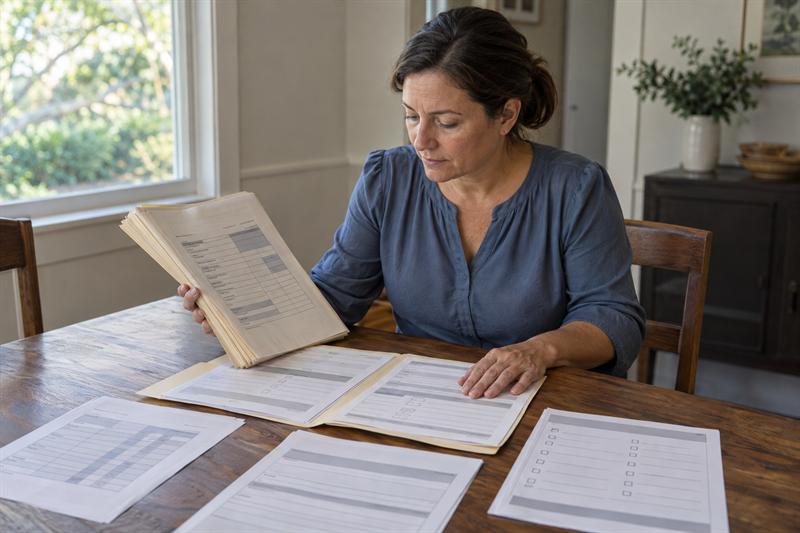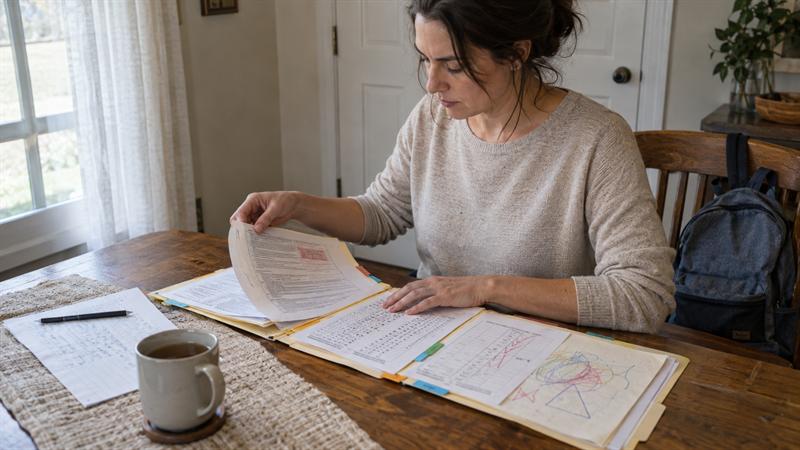

An evaluation rarely starts with a question. It starts with a sentence a caregiver has heard more than once: the reading is not improving, homework takes the whole evening, the school has scheduled a meeting about a 504 plan. By the time a family calls a practice, the decision to test may already be half-made while the purpose of the testing is still vague. That gap matters. The psychoeducational evaluation referral question, meaning the specific thing the testing is meant to clarify, decides what gets measured, how the report is organized, and whether the findings can support the decision that prompted the call.
Naming the question in advance is not paperwork. It is the step that separates a report a family can use from a report that documents a great deal and settles very little.
What a Psychoeducational Evaluation Referral Question Means
The referral question is not a diagnosis written ahead of time. It is a statement of what is not yet understood and of what depends on understanding it. In a finished report, it usually appears near the front under a heading such as Reason for Referral, and the measures that follow are selected to speak to it. A question about word reading and a question about task initiation call for different instruments, different records, and different interviews, even when both concern the same ninth grader.
When no question is set, an evaluation tends to default to a broad battery. The result can be accurate and still hard to use, because nothing in it is organized around the decision in front of the family. The contents of an evaluation are not fixed in advance, which is the point of what is included in a psychoeducational evaluation.
Start With the Decision, Not the Diagnosis
Caregivers often arrive with a label in mind: dyslexia, ADHD, autism, anxiety. The label may turn out to be part of the answer, but it is a poor starting point, because a label does not tell an evaluator what to do differently. A decision does.
Most referrals trace back to one of a few decisions. Sometimes it is a school meeting: whether the findings would support a request for an IEP or a 504 plan, and which accommodations would follow. Sometimes it is a placement question, such as whether a smaller class or a different setting is worth pursuing. Sometimes it is documentation for a college disability office or a standardized exam. Sometimes it is a second opinion, because an earlier report no longer matches what a family sees at home. Once the decision is named, the question becomes easier to write.
If the concern is emotional or behavioral rather than academic, the starting point may be different. Psychological evaluation versus psychoeducational evaluation sets out how the two differ in scope, which is worth settling before the first appointment rather than after.
What Makes a Referral Question Workable
A question that can guide an assessment tends to share a few features. They are easier to check on paper than to notice in conversation.
- It names a skill or a setting. Reading comprehension during timed science passages can be assessed directly. Struggling overall cannot.
- It describes something observable. A pattern a teacher or parent can point to, such as skipped multi-step directions, avoided writing tasks, or distress at transitions, gives the evaluator a place to begin.
- It is tied to a decision. A question with a deadline behind it, such as an eligibility meeting or an accommodation request, keeps the evaluation from drifting.
- It can be answered by assessment. Some concerns, such as whether a particular school is the right fit, depend on factors testing does not measure and belong in a different conversation.
From a Vague Concern to a Specific Question
Most referrals begin as a sentence from daily life, and the work is translation rather than invention. Three examples show the shift.
Before: She is doing poorly in reading. After: Is the difficulty at the word level, in decoding and spelling, or in understanding text once the words are accurate? The distinction changes which tests are chosen and what kind of intervention makes sense.
Before: He cannot focus. After: Is the problem sustaining attention, holding instructions in working memory, or starting a task without external structure? Each possibility points to different measures and different classroom supports.
Before: She is anxious about school. After: Is anxiety the primary concern, or has it followed a long stretch of academic difficulty? The order matters, because recommendations differ depending on which came first.
None of these rewrites is final. A workable psychoeducational evaluation referral question usually shifts once records arrive and the intake conversation adds history that was not visible from the outside.
Two Ways a Referral Question Goes Wrong
A question that is too broad, such as why a child is struggling in general, produces a battery that touches many areas and explains few of them. The report may be thorough, but the recommendations read as a list of strategies that could apply to almost any student.
A question that is too narrow carries its own risk. Asking whether a student has ADHD invites a yes-or-no answer and can crowd out what else is happening. A reading or language difficulty that no one asked about may explain more of the day-to-day than the attention concern that prompted the referral. A careful evaluation reports what the measures show, including findings outside the original question.
Both problems can be corrected before testing begins. A broad question usually narrows once a family decides which decision matters most right now. A narrow question widens with one addition: what else might be contributing.
How the Referral Question Shapes the Assessment Plan
The question determines the battery. A referral centered on reading may call for phonological processing, rapid naming, and achievement testing in word reading and comprehension. A referral centered on attention may call for executive function measures, working memory tasks, and rating scales completed at home and at school. A referral involving mood or behavior brings in social-emotional measures and adaptive behavior.
At Carolina Anchor Psychological & Educational Consulting, the areas assessed depend on the reason for referral. They can include intellectual ability, achievement, attention, executive function, memory and learning, phonological processing, auditory and visual processing, oral and pragmatic language, social-emotional functioning, adaptive behavior, autism characteristics, and visual-motor integration. The areas of assessment page lists the full set.
The plan is settled during the intake meeting, which gathers the reason for referral along with developmental and educational history. That conversation is also where a family’s question is sharpened. What follows the intake, from testing appointments through the feedback session, is described in the evaluation process from intake to feedback.
When the Question Comes From the School
Sometimes the question is not the family’s to write. A district evaluation answers what the district needs to know for eligibility, and it may leave a related concern untouched: a suspected dyslexia profile, attention, or the emotional piece behind school refusal. When parents disagree with a district’s evaluation, or believe an area was not assessed, an independent educational evaluation is one route the law provides.
An IEE is completed by a qualified professional who is not employed by the district. Under federal special education law, when parents disagree with the district’s evaluation, the district must either fund the IEE without unnecessary delay or file for due process to defend its own evaluation. A school must consider an IEE that meets its criteria when making decisions about services. Because those criteria vary by district, including evaluator qualifications, location, and scope, it helps to ask for the district’s policy in writing before an IEE is scheduled.
The scope of an IEE is broader than a second look at scores. Independent educational evaluations explains what the process can include, and a family checklist for considering an independent educational evaluation is a practical place to start when the decision is still open.
Bringing the Question to the First Conversation
A family does not need a finished question to book a first appointment. It helps to arrive with the raw material: what teachers have said, what the last report concluded, which supports have already been tried, and what decision is coming up. The intake meeting is where that material becomes a workable question and a plan.
Carolina Anchor Psychological & Educational Consulting provides psychological and psychoeducational evaluations for children, adolescents, and young adults, in person in Mount Pleasant and by telehealth across South Carolina, by appointment. Dr. Renee Lake holds a Ph.D. in School Psychology from The Ohio State University and has 25 years of post-graduate experience in private psychological practice, residential treatment settings, and public and private schools. An initial consultation is free.
A full evaluation typically takes four to six hours, often across two morning appointments, with a feedback meeting about two weeks after testing and a written report with recommendations for home, school, and future planning. The psychoeducational evaluation referral question is usually settled well before that first testing session, and the plan is built around it.
Key Takeaways
What tends to make the difference is preparation that happens before any appointment.
- Write the question in one sentence. If it takes two, there are probably two questions, and one of them can wait.
- Bring a short record of what has already been tried, including tutoring, reading intervention, and past accommodations, since the history shapes which measures are selected.
- Ask whether prior testing already answers the question; some concerns are settled by reviewing an existing report instead of repeating it.
- Expect the wording to change at the intake meeting. The goal is a starting point clear enough to test, not a final version.
Conclusion
The referral question is the part of the process a family can prepare without training in assessment, and it is the part that most affects whether the results are usable. A question tied to a real decision, narrow enough to answer and broad enough to catch what else may be involved, gives an evaluation something to do.
Carolina Anchor Psychological & Educational Consulting is at 3003 Dunes West Boulevard, Suite #5, Mount Pleasant, SC 29466, by phone at (843) 256-6814 and by email at lake@carolinaanchor.com. Families can contact the practice to schedule a free consultation and start with the question they are trying to answer.