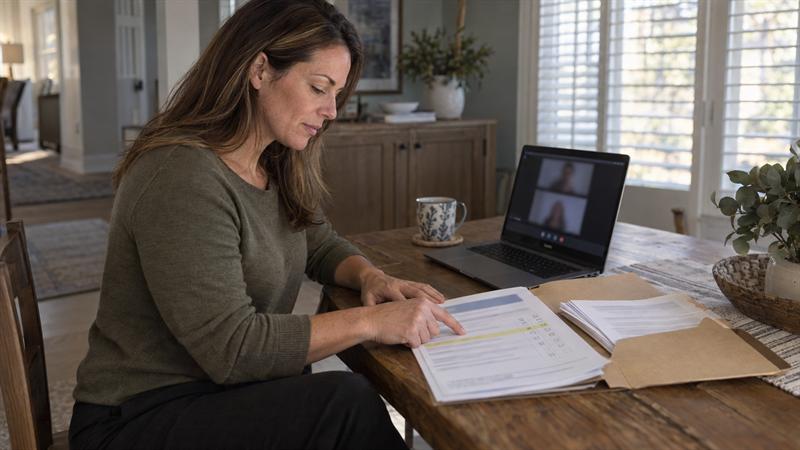
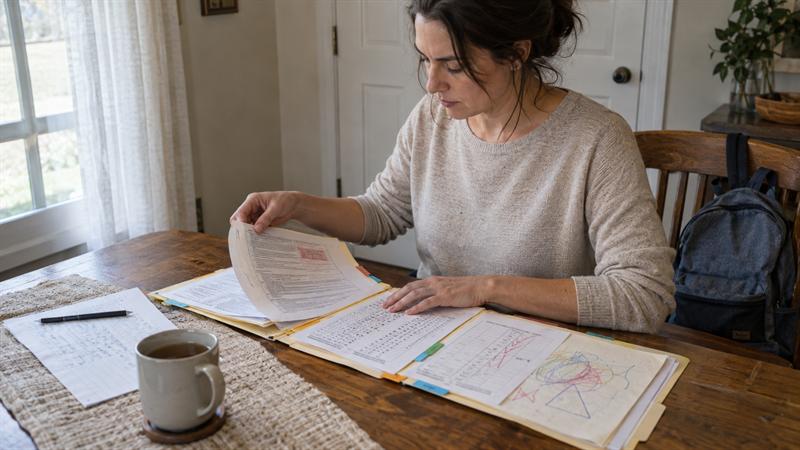
Quick Answer: Families may want to look more closely at an Independent Educational Evaluation when school concerns keep showing up, current results do not seem to explain day-to-day struggles, or recommendations are too vague to guide real decisions. The core issue is not always a lack of testing. It is often a lack of clear, useful answers.
At Carolina Anchor Psychological & Educational Consulting, families often reach this point after a child has already been discussed at school, support has been tried, and there is still a sense that something important is missing. This checklist is designed to help families decide whether the next step is to keep monitoring, ask better questions, or consider an independent educational evaluation.
When Families Start Wondering About an IEE
Most families do not start by searching for an IEE because they want another report. They usually start because what they are seeing at home, hearing from school, and reading in an evaluation does not line up in a way that makes sense.
A student may be trying hard but still falling behind, getting through the school day but unraveling at homework time, or receiving general recommendations that do not explain what to do next. When the picture stays unclear, decisions become harder, not easier.
For a fuller overview of what an IEE is and how it fits into school decision-making, families can review independent educational evaluations.
Common situations that lead parents to look for a second opinion
- Persistent academic struggles despite support: The student keeps struggling even after tutoring, intervention, or classroom help. This can signal that classroom strategies alone are not fully addressing the issue.
- Concerns about attention, organization, or executive functioning: Work may be missing, slow, incomplete, or inconsistent. If effort is there but follow-through is not, families often want a better explanation.
- Behavioral or emotional concerns that affect learning: Avoidance, shutdown, frustration, or school-related stress can all be part of a pattern that still does not feel fully understood.
- Confusion after a school evaluation or school meeting: Sometimes everyone leaves with paperwork but no real clarity. That can leave families with more uncertainty at the exact point they need direction.
Why uncertainty is often the real issue
Families sometimes assume the question is whether the school evaluation was right or wrong. A more useful question is whether the evaluation answered the right questions in the first place.
A report may describe scores and performance levels but still fail to explain why a student is struggling in everyday life. When that happens, the issue is not simply disagreement. The issue is that the information still is not usable.
Quick Checklist: Signs It May Be Time to Look More Closely
If several of the signs below fit, families may need more than reassurance. They may need a clearer way to understand what is happening and what kind of support or evaluation would make sense next.
School concerns have stayed the same or grown over time
When concerns keep showing up across grading periods, school years, or multiple support attempts, that pattern matters. Problems that persist usually do not resolve through waiting alone.
The evaluation results do not seem to explain daily struggles
A child may have scores that look average or mixed, yet still struggle every day with output, homework, attention, stamina, or frustration. If the results do not explain the lived experience, the family still may not have the answer it needs.
Recommendations feel too broad, unclear, or hard to use
General recommendations can sound helpful until a family tries to use them. If the report does not lead to clearer school planning or more informed support at home, the problem shifts from “we have information” to “we still do not know what to do with it.”
Different adults are seeing very different pictures
Sometimes one teacher sees inattention, another sees anxiety, and home sees exhaustion and shutdown. A student may present differently across settings, which can make simple explanations break down quickly.
The child’s profile seems more complex than one test result suggests
Learning, attention, emotional, and behavioral factors do not always stay neatly separated in real life. If the concerns overlap, the next step may require a more complete understanding of the student rather than a narrower one.
If you are seeing several of these signs, it may be time to take a closer look.
- The same concerns keep coming up even after support has been tried.
- The report provides data but not a workable explanation.
- School and home are describing very different problems.
- Recommendations sound reasonable but do not change what is happening.
When that pattern is in place, families often need more clarification, not more waiting.
A Deeper Family Decision Checklist
A quick checklist helps families notice patterns. A deeper checklist helps families decide whether the concern is broad enough, persistent enough, or unclear enough to justify another step.
Questions about academics and learning
- Is the student struggling in one academic area, or are difficulties showing up across reading, writing, math, or written output?
- Do classroom performance and test results seem out of sync?
- Has progress stayed uneven even with support?
If the answers point to a long-running or hard-to-explain academic pattern, the concern may need more than basic monitoring.
Questions about attention, organization, and stamina
- Is the child able to start, sustain, and complete tasks consistently?
- Do longer or less structured tasks break down faster than shorter, supported ones?
- Does effort seem much stronger than the final result?
Families often know the child is trying, but the work still comes out incomplete, disorganized, or far more exhausting than expected. When effort and output stay far apart, that can point to a need for clearer evaluation of what is getting in the way.
Questions about emotional or behavioral patterns
- Do anxiety, frustration, avoidance, or shutdown show up around school demands?
- Are school concerns starting to affect confidence or willingness to participate?
- Do adults disagree about whether the issue is behavioral, emotional, academic, or some combination of those?
When school stress starts shaping mood, participation, or behavior, the situation may be misunderstood if it is treated only as a motivation problem. That can lead to support that misses the real issue.
Questions about whether the current evaluation answered the right questions
- Did the prior evaluation focus on the concerns the family most wanted explained?
- Were the findings specific enough to use in school planning?
- Did the report explain why the student is struggling, or mostly describe how the student performed?
Families who want help making sense of a report may also find it useful to read how to read a psychoeducational evaluation report in plain language. A common misunderstanding is that any evaluation automatically gives clear direction. It does not always. Some evaluations produce data without producing a roadmap.
Questions about whether more independent input would help planning
- Would another perspective help the family make sense of mixed information?
- Would clearer recommendations help with school planning conversations?
- Would a more complete understanding help the family decide what to do next?
If the answer is yes to several of these questions, the issue may no longer be whether the family has enough concern. It may be whether the family has enough clarity to keep relying on the current plan.
What to Gather Before Deciding
Families often make better decisions when they can see the pattern clearly. That usually means pulling together the most relevant information, not every paper ever sent home.
School records and prior testing
- Prior evaluation reports
- School testing summaries
- IEP, 504, or intervention documentation when those are part of the picture
These records can help show what has already been asked, what has already been tried, and what still feels unresolved.
Report cards, progress data, teacher feedback, and work samples
- Patterns across report cards or grading periods
- Teacher comments that describe concerns not obvious in scores alone
- Work samples that show inconsistency, unfinished work, slow output, or uneven quality
This is often where the pattern becomes easier to see. Numbers may look acceptable in one place while teacher feedback and work samples show a student working much harder than peers just to stay afloat.
Parent observations that are worth writing down
- Homework battles or prolonged homework time
- Task avoidance or fatigue
- Emotional reactions to schoolwork
- Differences between what home and school report
Parent observations matter because they fill in the part of the day schools do not always see. If homework consistently leads to exhaustion, tears, refusal, or hours of one-on-one support, that may change how the overall concern should be understood.
What an IEE May Help Clarify
An IEE is often most useful when families need a clearer explanation, not simply more paperwork. It can help when the current picture is incomplete, inconsistent, or too broad to support good planning.
Learning differences and academic skill patterns
An IEE can help sort out whether the student’s academic struggles follow a specific learning pattern or a broader one. That matters because support often stalls when the concern is treated as general underperformance instead of a more specific learning issue.
Attention, executive functioning, and processing concerns
These concerns often show up as inconsistency, slow output, weak organization, difficulty getting started, or a steep drop-off in stamina. Families are often told the student “knows the material” but still cannot show it reliably. That can suggest the problem is not understanding alone.
Why a student may be struggling despite effort or support
This is one of the main reasons families seek another perspective. A common pattern is a student who works hard, gets help, and still does not progress in a way that matches that effort. When the explanation is missing, support can become trial and error. Families who want to understand what comes after testing may find what happens after a psychoeducational evaluation at home and school helpful for understanding how results are used.
When a Family May Not Be Ready for an IEE Yet
Not every concern needs an immediate outside evaluation. Sometimes the next step is better observation, better explanation, or enough time to see whether a new support plan is actually working.
Situations where more school data or follow-up questions may come first
- The concern is new and the pattern is not clear yet.
- A support plan was just started and there has not been enough time to judge the response.
- The family still needs a clearer explanation of recent findings before deciding on another evaluation.
That said, waiting only helps when something meaningful is being watched or clarified. Waiting without a plan can lead to the same questions resurfacing later, often with more frustration attached.
Why “not yet” is different from “not needed”
“Not yet” means the family is still collecting the information needed to make a sound decision. It does not mean the concern is minor or that it will fade on its own.
When ongoing struggles are treated as temporary for too long, students can become more discouraged, more avoidant, or further behind before the need for more clarity is addressed.
How to Decide on the Next Step
Once the pattern is clearer, the next step should be practical. Families usually move in one of three directions.
Monitor and document
This makes sense when concerns are still emerging or a new support plan has only recently started. Monitoring should be active, with specific patterns, timeframes, and examples, not vague waiting.
Ask the school team for clarification
This is often the better option when the family has information but not understanding. If the report or school discussion still leaves major questions unanswered, clarification is needed before good decisions can be made.
Seek an independent consultation or evaluation
This is often the right step when concerns are persistent, the picture remains incomplete, or another perspective is needed to guide planning. Families who want to understand what that process involves can review the psychoeducational evaluation process to see how evaluation moves from intake to feedback.
Key Takeaways
- An IEE question usually starts with ongoing confusion, not conflict.
- The main problem is often not the absence of information. It is the absence of clear, usable answers.
- If concerns keep returning, results do not explain daily struggles, or recommendations do not lead to action, the current plan may not be enough.
- Good decisions come from clear patterns, relevant records, and the right questions.
- When the picture stays incomplete, waiting often prolongs frustration rather than resolving it.
Conclusion
The real issue is not whether a family can keep gathering bits of information. It is whether the current information is strong enough to explain what is happening and guide the next step. When that clarity is missing, school concerns can drag on, supports can stay too general, and students may carry the cost through stress, discouragement, and inconsistent progress.
That is why taking the next step can be practical. Carolina Anchor Psychological & Educational Consulting helps families sort through unclear evaluation results, persistent school concerns, and mixed information that is not leading to a workable plan. When the same questions keep coming back, the next step is often a clearer framework, not more waiting. Families who are ready to move forward can contact Carolina Anchor Psychological & Educational Consulting to discuss whether an independent educational evaluation makes sense.
Carolina Anchor Psychological & Educational Consulting’s Approach
At Carolina Anchor Psychological & Educational Consulting, the goal is not to create more paperwork for families. The goal is to help make the pattern clearer so decisions about school, support, and next steps are based on useful understanding rather than ongoing guesswork.
This approach is especially important when a student’s struggles are not showing up in a simple way. A child may look capable on paper, yet still be overwhelmed by daily demands. Another may receive broad school support without anyone being able to explain why the problem keeps returning. In those situations, a careful, independent look can help move the family from confusion to a more workable plan.
FAQ
Can a parent consider an IEE even if the school already completed an evaluation?
Yes. A school evaluation does not always answer the questions a family is actually trying to solve. Many families start considering an IEE after they receive results but still cannot make sense of the child’s daily academic, attention, or behavioral struggles.
The key distinction is that this is not always about disagreeing with the school. Sometimes the concern is that the evaluation feels too broad, too limited, or not specific enough to guide planning. If the family has information but still does not have a workable explanation, the question is still open.
How do families know if an evaluation answered the right questions?
A helpful evaluation should explain the concern that led to testing in the first place. If the report describes performance but does not help explain why the student is struggling, the most important question may still be unanswered.
A common pattern is that families receive scores and general recommendations but still do not understand what is driving unfinished work, emotional fallout, or inconsistent performance. That distinction matters. Information alone is not the same as clarity.
What records should parents gather before deciding about an IEE?
The most useful records are the ones that show patterns across time and settings. That usually includes prior evaluation reports, school testing summaries, report cards, progress data, teacher comments, work samples, and support documents such as an IEP or 504 plan when those apply.
Parent notes are also useful when they show repeated homework struggles, fatigue, avoidance, or big differences between school and home. The goal is not to gather everything. The goal is to gather what makes the pattern easier to see.
Does every school concern mean a child needs an independent educational evaluation?
No. Some concerns are too new, too unclear, or too tied to a recently started support plan to justify an immediate outside evaluation. In those cases, more observation or better follow-up questions usually come first.
The important distinction is whether the problem is a moment or a pattern. A single concern can be temporary. A concern that stays consistent across time, settings, or demands usually points to a need for deeper clarification.
What can an independent educational evaluation help clarify?
An IEE can help clarify how learning, attention, executive functioning, and other school-related concerns fit together when the current picture still feels incomplete. Families often need a clearer explanation of why a student is struggling despite effort, support, or prior evaluation results.
What often gets misunderstood is that the value of an IEE is not just additional data. It is better interpretation of the overall pattern so planning decisions can be more precise.
What should a family do first if they are still unsure about next steps?
Start by organizing what is already known. Pull together the existing reports, school feedback, work samples, and a few concrete examples of what is happening day to day.
This step often helps clarify the decision because it shows whether the family has a clear pattern or just scattered concerns. If the information still does not form a coherent picture, that usually means the family needs more than reassurance.