
Quick Answer: A psychoeducational evaluation looks beyond grades or an overall ability score. It combines background information, cognitive and academic testing, and targeted assessment of attention, executive functioning, memory, language, or social-emotional concerns to clarify what may be affecting learning and school performance.
When homework takes hours, grades do not reflect effort, or organization problems lead to repeated missed work, one score rarely explains the full picture. Carolina Anchor Psychological & Educational Consulting provides evaluations for children, adolescents, and young adults that examine the broader pattern behind these concerns so next steps are based on clearer information rather than assumptions.
What Is Included in a Psychoeducational Evaluation?
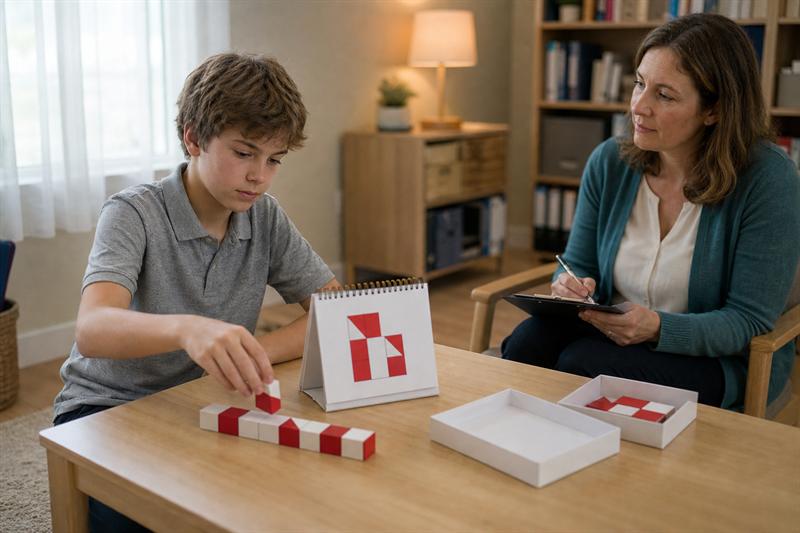
A comprehensive psychoeducational evaluation generally includes a clinical interview, a review of relevant history and records, formal testing of cognitive and academic skills, and additional measures chosen for the person’s specific concerns. The assessment plan is individualized. A student with persistent reading difficulty may need a different focus than a student whose main challenge is task completion, time management, or sustained attention.
- Clinical interview and relevant developmental, educational, medical, and family history
- School records, teacher comments, prior reports, and work samples when available
- Cognitive assessment to understand reasoning and learning patterns
- Academic achievement testing in reading, writing, mathematics, or related skills
- Assessment of attention, memory, processing efficiency, and executive functioning when relevant
- Rating scales or social-emotional information when behavior, mood, anxiety, or adjustment concerns are part of the referral question
- Feedback, a written report, and recommendations based on the full set of findings
The purpose is not simply to produce a list of scores or confirm a label someone already suspects. It is to identify how a student learns, where performance may break down, and which supports fit the student’s pattern of strengths and difficulties. Families can review the practice’s assessment services and areas of focus for additional context.
A Psychoeducational Evaluation Is Built Around the Questions That Need to Be Answered
Why the Assessment Plan Is Different for Every Child, Teen, or Young Adult
The referral question should guide the evaluation. A younger child with early reading concerns, a teenager with incomplete assignments, and a college student struggling with timed exams may each need different information to understand what is interfering with performance.
The evaluation plan is shaped by factors such as:
- Current concerns at school, home, college, or work
- Developmental and educational history
- Prior interventions, tutoring, evaluations, or support plans
- Academic demands at the student’s current stage
- Family observations and available school documentation
Problems can start when testing is treated like a preset package. A broad concern such as “my child is falling behind” needs to be narrowed into the skills and situations creating the difficulty. Not every person needs every measure, but the evaluation should address the areas needed to answer the referral question thoroughly.
Common Reasons Someone May Seek an Evaluation
Families and students often seek a psychoeducational evaluation after a pattern has persisted, rather than after one difficult assignment or disappointing grade. A common pattern is that effort increases while results remain inconsistent. Over time, this can lead to frustration, avoidance, and declining confidence.
- Reading, writing, spelling, or math remains difficult despite support
- Homework takes far longer than expected or regularly ends in conflict
- Assignments are missed because planning, organization, or task initiation breaks down
- Test performance is inconsistent with classwork or apparent understanding
- Attention, memory, or processing concerns interfere with daily school demands
- A student begins avoiding schoolwork because repeated difficulty has become discouraging
These signs do not identify one specific condition. They do indicate that the current explanation may not be enough. For families concerned about persistent reading, writing, or math struggles, Carolina Anchor’s information on learning disabilities and academic concerns provides related context.
Information Gathered Before Formal Testing
Clinical Interview and Relevant Background History
Formal testing is only one part of a psychoeducational evaluation. The intake process places current concerns in context by reviewing relevant developmental, medical, educational, family, behavioral, and social-emotional history.
For children, parents or caregivers commonly provide much of this background. Adolescents and young adults also offer an important perspective because they can describe where schoolwork becomes difficult, which strategies they have already tried, and how concerns affect daily functioning.
History matters because the same visible problem can develop for different reasons. Trouble completing homework, for example, may relate to slow reading, weak task planning, attention regulation, emotional distress, sleep disruption, or several overlapping factors. Without this context, an individual test score may be misunderstood.
School Records, Prior Reports, and Work Samples
Report cards, teacher feedback, intervention records, standardized testing, prior evaluations, and schoolwork samples can show whether a concern is new, longstanding, or becoming more visible as academic demands increase. These records also help connect formal findings to classroom performance.
A student may perform adequately in one setting but struggle when work requires independent reading, sustained writing, multi-step problem-solving, or self-managed deadlines. This distinction matters because grades alone do not always show where the difficulty begins.
Rating Scales and Input From Other Informants, When Appropriate
When attention, executive functioning, behavior, or social-emotional concerns are part of the referral question, rating scales and input from parents, teachers, or the student may be included. These tools provide another view of how concerns appear across settings.
Rating scales do not replace a comprehensive evaluation, and they do not determine a diagnosis by themselves. They should be considered alongside history, observations, academic performance, and formal assessment findings. For related concerns, review Carolina Anchor’s page on ADHD, attention, and executive functioning.
Core Areas That May Be Included in a Psychoeducational Evaluation
The areas included in an evaluation depend on the questions that need to be answered. A careful assessment explains what each area contributes to the larger picture instead of treating every category as a separate problem.
Cognitive Abilities and Learning Profile
Cognitive assessment examines how a person approaches reasoning, problem-solving, verbal information, visual information, and new learning tasks. It is sometimes understood as simply an IQ test, but the more useful information comes from the learning profile created by looking at patterns across different thinking skills.
Some students show broadly even skills. Others show clear strengths in one area and meaningful difficulty in another. An uneven profile can help explain why a capable student still struggles with specific school demands, particularly when those demands rely heavily on areas that require more effort.
Academic Achievement in Reading, Writing, and Mathematics
Academic achievement testing looks at current skills in areas such as reading, written expression, spelling, and mathematics. It helps clarify whether a concern is broad or concentrated in a specific academic area.
- Reading accuracy, fluency, and comprehension
- Written expression, spelling, and written organization
- Math calculation and math problem-solving
- How efficiently academic tasks are completed when speed is relevant
A low score in one area does not automatically establish a learning disability. The evaluator considers the pattern of academic findings, cognitive skills, educational history, and real-world performance before drawing conclusions. This helps prevent one difficult test result from being treated as the whole story.
Attention, Working Memory, and Processing Efficiency
Attention involves sustaining focus, managing distractions, and returning to a task after interruptions. Working memory involves holding information in mind long enough to use it, such as remembering multi-step directions while completing an assignment. Processing efficiency concerns how quickly and accurately a person handles certain types of information.
When these areas are difficult, schoolwork can become slower and more tiring. Students may lose their place in multi-step tasks, forget directions, need repeated reminders, or use so much energy keeping up that less energy remains for higher-level learning.
Attention concerns require careful interpretation because similar behaviors can arise from several sources. A checklist, a single test, or one classroom observation does not provide a complete answer.
Executive Functioning and Everyday Organization
Executive functioning refers to the skills used to plan, begin tasks, organize materials, manage time, monitor work, and shift between tasks. These skills become increasingly important as students take on long-term projects, changing schedules, and more independent responsibilities.
In adolescents and young adults, these challenges can become especially apparent when a student understands the material but still misses deadlines, underestimates how long work will take, or struggles to begin without repeated prompting. The pattern may become more noticeable as academic demands increase because effort alone does not create systems for planning and follow-through.
Executive-functioning difficulty is not the same as low intelligence or lack of motivation. It is a functional pattern that should be understood in relation to attention, learning skills, emotional factors, and the demands of the student’s setting.
Language Skills When Communication or Reading Concerns Are Present
Language skills may be relevant when concerns involve understanding verbal information, expressing ideas clearly, following directions, retrieving words, or understanding what is read. A student can appear attentive but still miss important information when language demands are too complex or move too quickly.
Language-related concerns are included when the history and referral question indicate they are relevant. When specialized language assessment is needed, collaboration or referral to another qualified professional may also be appropriate.
Social-Emotional and Behavioral Functioning When These Factors May Affect Learning
Stress, mood changes, anxiety, behavior concerns, sleep disruption, and social difficulties can affect concentration, attendance, motivation, and academic performance. A student who feels overwhelmed by schoolwork may avoid assignments, shut down during tests, or appear disengaged even when the underlying issue is more complex.
Academic difficulty should not automatically be attributed to emotional concerns. This can happen when a student becomes frustrated after struggling for a long time. A comprehensive evaluation considers whether social-emotional factors are contributing while still examining the learning and cognitive skills that may be related to the frustration.
How Evaluators Put the Pieces Together
Looking for Patterns, Not Relying on One Score
A psychoeducational evaluation is most useful when findings are interpreted together. The evaluator considers interviews, records, observations, formal testing, rating scales when relevant, and the student’s day-to-day functioning.
This integrated approach matters because one score rarely explains a student’s experience. A student with strong reasoning skills may still struggle with reading fluency, working memory, organization, or speeded tasks. Another student may have average academic scores but need substantial time and effort to maintain them.
The goal is to understand the pattern: what comes easily, what requires disproportionate effort, and what interferes with consistent performance. That pattern can guide recommendations more effectively than a single score alone.
Why Similar School Struggles Can Have Different Causes
Incomplete work is a useful example. It can result from trouble starting tasks, difficulty sustaining attention, slow reading or writing, weak time management, language demands, emotional distress, sleep problems, or a combination of these issues.
Adults may understandably focus on the visible outcome, such as missing assignments, while the student is dealing with the process that contributed to them. If that process is not understood, interventions may target the wrong problem and the same pattern can continue.
When school struggles repeat despite increased effort, it may help to identify where the breakdown is occurring rather than simply add more pressure.
- Homework regularly takes much longer than expected
- Grades remain inconsistent even when the student studies
- Assignments are lost, delayed, or incomplete week after week
- Reading, writing, or math leads to avoidance and escalating frustration
These patterns may indicate that current supports are not resolving the underlying concern. A more complete evaluation can help clarify what is interfering with learning and which support approach fits the student’s profile.
What the Psychoeducational Evaluation Process Usually Looks Like
Consultation and Intake
The process begins with a discussion of the concerns that led to the evaluation, relevant history, and the questions the family or student needs answered. This step helps determine whether a psychoeducational evaluation is appropriate and which areas need attention.
At Carolina Anchor Psychological & Educational Consulting, the consultation is designed to clarify the presenting concern before testing begins. Starting with the right question helps prevent the evaluation from becoming a generic collection of measures that does not address the student’s actual difficulty.
Testing Sessions and Practical Preparation
Testing may occur across one or more sessions based on the assessment plan and the individual’s needs. Students generally benefit from arriving rested, having eaten, bringing glasses or hearing supports if needed, and providing requested school records or prior reports.
- Keep routines as normal as possible before testing
- Bring requested documents that show school history or prior support
- Share relevant medication information or instructions as requested
- Follow evaluation-specific guidance for in-person or telehealth procedures
The goal is not to study for testing. The purpose is to understand the student’s current functioning as accurately as possible. In-person and telehealth formats may be available depending on the student’s needs and the type of assessment being completed; practical details are covered in the psychoeducational evaluation FAQ.
Feedback, Written Findings, and Recommendations
After the evaluation, feedback explains the findings in understandable language. A written report typically summarizes relevant assessment results, the integrated interpretation, and recommendations that fit the individual’s strengths, needs, and current goals.
Recommendations may address learning strategies, organizational systems, school communication, additional assessment, or referrals when appropriate. The report can support conversations about educational planning, but schools, colleges, testing agencies, and other institutions use their own policies when considering accommodations or eligibility.
What Families, Teens, and Young Adults May Learn From the Results
The results should provide a clearer explanation of how learning, thinking, attention, and self-management skills affect current performance. They should also identify strengths that can support areas of difficulty.
- Which skills are creating the greatest strain in daily academic work
- Why performance may be inconsistent across subjects or settings
- Which strengths can support learning and problem-solving
- Which strategies or supports fit the student’s current needs
- Whether school collaboration, further assessment, or another type of support should be considered
For many families, the most important outcome is clarity. When the reason behind a repeated struggle is better understood, the conversation can shift from “Why are they not trying harder?” to “What support addresses the actual barrier?”
When It May Be Time to Ask About a Psychoeducational Evaluation
It may be time to explore an evaluation when difficulties persist despite effort, tutoring, classroom support, or repeated attempts to improve routines. Exploring concerns before they become more entrenched can help reduce ongoing frustration and uncertainty.
- Academic skills remain difficult despite consistent support
- There is a clear mismatch between apparent ability and everyday performance
- Schoolwork leads to avoidance, conflict, or a growing loss of confidence
- Focus, planning, studying, or homework completion remains difficult across time
- Concerns become more pronounced as school workload and independence increase
If a student is working harder but falling further behind, the current approach may not be enough. Identifying the source of the difficulty can help families and students pursue support that better matches the student’s needs.
Key Takeaways
- A psychoeducational evaluation is individualized and does not use the same assessment plan for every student.
- It commonly combines history, records, observations, formal testing, and relevant rating scales.
- It examines patterns of strengths and challenges rather than relying on one score or a single symptom.
- Its purpose is to clarify what is affecting learning and identify practical next steps based on the student’s actual profile.
Talk With Carolina Anchor About an Evaluation
A low grade, missed assignment, or difficult school year may point to a larger unanswered question: whether learning skills, academic demands, attention, executive functioning, emotional factors, or several overlapping issues are affecting the student’s performance.
When that question remains unclear, families may spend time trying strategies that do not match the student’s needs. Carolina Anchor Psychological & Educational Consulting provides psychoeducational evaluations for children, adolescents, and young adults to clarify these patterns and guide next steps with a fuller understanding of the student’s needs. Request a consultation to discuss concerns that are continuing to interfere with learning or academic progress.
Frequently Asked Questions
Is a psychoeducational evaluation the same as an IQ test?
No. Cognitive testing may be part of a psychoeducational evaluation, but an evaluation is broader than an IQ test. It may also assess academic skills, attention, working memory, executive functioning, language, and other areas related to the concern being explored.
Cognitive results show part of how a person approaches learning and problem-solving. They do not independently explain why a student has trouble reading, writing, completing homework, or keeping up with timed tasks. The useful conclusion comes from interpreting cognitive findings alongside academic performance, history, records, and observations.
Does every psychoeducational evaluation include assessment of ADHD-related concerns?
No. Attention and executive-functioning measures are included when referral concerns point to issues such as distractibility, disorganization, incomplete work, difficulty starting tasks, or inconsistent performance.
ADHD-related concerns can overlap with learning difficulties, language demands, emotional stress, sleep disruption, and other factors. That is why one rating scale or one test result does not provide a complete answer. The key issue is whether the assessment plan gathers enough relevant information to understand how attention and self-management affect daily functioning.
How is a psychoeducational evaluation different from school testing?
School-based and independent evaluations can serve different purposes and may follow different processes. Available assessment tools, referral criteria, timelines, and intended uses vary by setting.
An independent psychoeducational evaluation can focus closely on the individual referral question and integrate interviews, records, observations, formal testing, and targeted assessment areas. Schools make their own educational eligibility and service decisions, so an evaluation report provides information for planning rather than an automatic determination.
Can a psychoeducational evaluation help with school accommodations?
Yes, evaluation findings and recommendations can provide useful information for discussions about educational supports or accommodations. A report can explain how learning, attention, processing, or executive-functioning patterns affect academic performance and identify strategies that fit the student’s profile.
However, a report does not automatically establish eligibility for an IEP, a Section 504 plan, college accommodations, or testing accommodations. The school, college, testing organization, or other institution applies its own policies and review process. The evaluation’s value is the detailed explanation of the student’s needs and functional barriers.
How should my child or teenager prepare for psychoeducational testing?
Preparation should focus on helping the student arrive ready to engage. Adequate sleep, regular meals, needed glasses or hearing supports, and requested school records or prior reports can help the process run smoothly.
Students should not study for psychoeducational testing. The evaluation is designed to understand current functioning, so typical routines and accurate background information are more useful than test preparation. Evaluation-specific instructions matter most when medication schedules, records, telehealth procedures, or other practical details apply.
Can young adults receive a psychoeducational evaluation?
Yes. Psychoeducational evaluations can be relevant for young adults when college, training programs, or other independent settings bring long-standing difficulty with reading, writing, organization, studying, time management, or sustained attention into clearer view.
The assessment plan should reflect the young adult’s current goals and functional concerns. Difficulty managing reading-heavy courses raises different questions than repeated problems with planning, written expression, or task initiation. The evaluation should focus on the pattern affecting the student’s current academic or training demands.