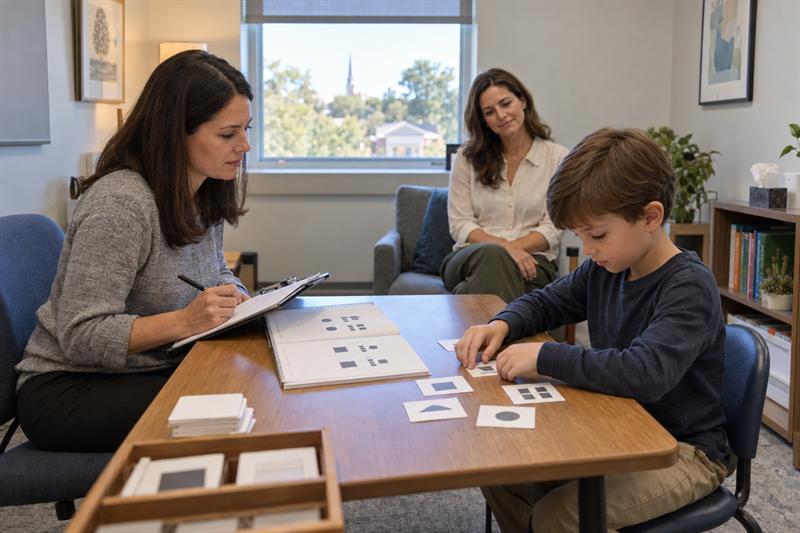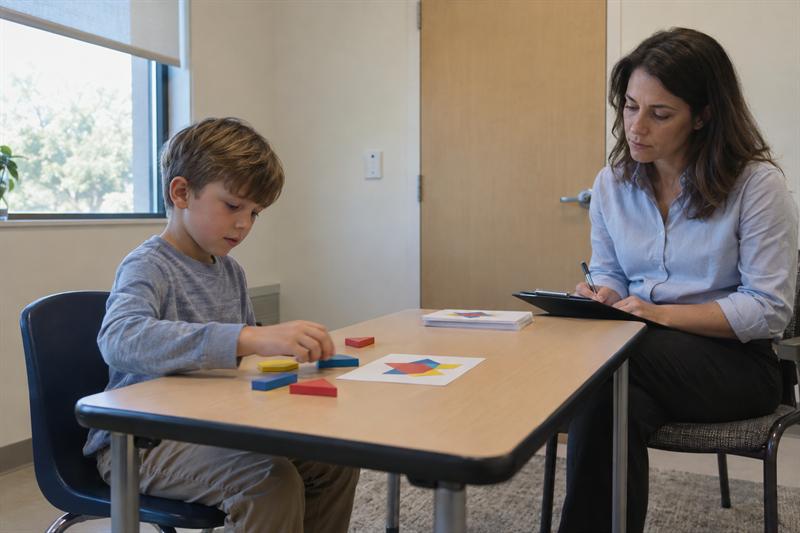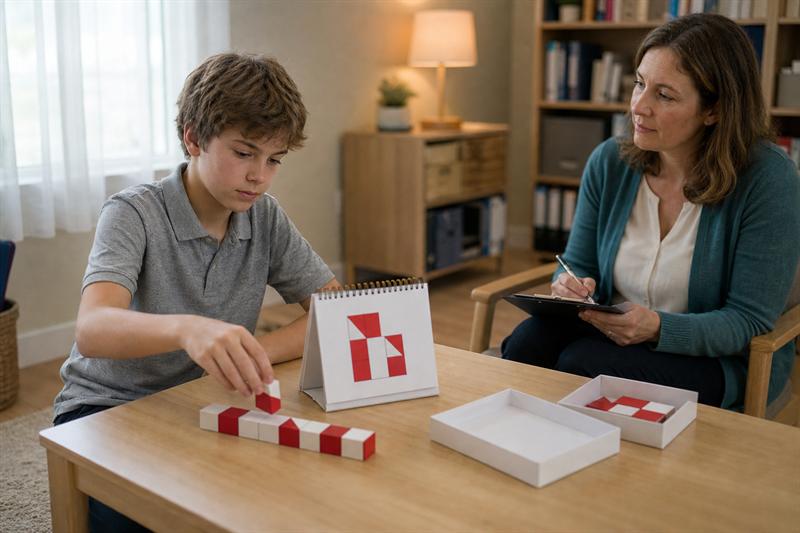

Why preparation matters before a psychoeducational evaluation
Preparation matters because it helps your child arrive feeling supported instead of pressured. A psychoeducational evaluation is not something to study for. It is a process used to better understand how a child or teen learns, thinks, focuses, and manages academic demands.
Carolina Anchor Psychological & Educational Consulting helps families think through this part of the process. Parents often want to help, so they start explaining too much, practicing skills, or emphasizing how important the appointment feels. That can raise anxiety instead of helping the child feel more prepared.
The goal is simple: help the evaluator get an accurate picture of your child’s strengths and challenges. If you want a clearer sense of what the evaluation covers, this overview of what is included in a psychoeducational evaluation explains the areas that are typically assessed.
- Helpful preparation: keeping routines steady, gathering records, answering forms carefully, and explaining the appointment in a calm way
- Unhelpful preparation: drilling skills, rehearsing answers, or making the evaluation sound like a high-stakes test
If preparation turns into coaching, children can become more self-conscious and more focused on getting things right than on simply engaging naturally in the process.
How to explain the evaluation to your child or teen
What to say to younger children
For younger children, keep the explanation short and simple. A helpful explanation sounds like this: “You’re going to meet with someone who wants to learn how you think and learn so adults can understand what helps you best.”
Young children usually respond better when the message is calm and matter-of-fact. Some worry they are in trouble, especially if school has already felt stressful. That is why it helps to say clearly that they are not being punished and there is no grade to earn.
What to say to teens
Teens usually want a more direct explanation. They are often less worried about the activities themselves and more concerned about what the results will mean. That concern may show up as skepticism, resistance, or short answers rather than obvious anxiety.
A clearer way to frame it is: “This evaluation is meant to help us better understand how you learn, focus, and manage school demands so the right supports can be considered.” That approach respects the teen’s perspective and avoids talking down to them.
Many families miss this at first. Teens do not always respond well to vague reassurance like “It’s no big deal.” They often respond better when the purpose is clear and the conversation feels honest.
What to avoid saying
Some phrases can raise pressure quickly. When families use them, the evaluation can start feeling like something the child has to succeed at instead of something meant to provide clarity.
- Avoid saying it is a big test they need to do well on.
- Avoid saying the evaluator is trying to find out what is wrong with them.
- Avoid giving a long preview of every task they might do.
If you overexplain, children and teens may start thinking more about how they are supposed to perform than about simply participating. That can get in the way of the process. Carolina Anchor Psychological & Educational Consulting addresses many of these concerns in its FAQ section, including questions families often have before an evaluation begins.
What parents and caregivers can do before the appointment
Gather helpful records and background information
One of the most useful things a parent can do is gather records that show patterns over time. That usually includes report cards, progress reports, teacher feedback, prior testing, and any IEP or 504 documents. Relevant developmental or medical history can also help provide context.
A common mistake is assuming one recent concern tells the whole story. In many cases, longer-term patterns are more useful. A child who has struggled with attention, work completion, or uneven academic progress across more than one school year may present a different picture than a child dealing with one isolated rough period.
If your family wants a step-by-step look at how this information fits into the overall process, this overview of the psychoeducational evaluation process from intake through feedback helps connect the preparation stage to what happens next.
Share concerns, questions, and patterns you have noticed
Parents and caregivers often see parts of the picture that do not show up in school records alone. That includes homework struggles, emotional reactions to school, difficulty getting started, disorganization, memory issues, or a pattern of shutting down when work feels hard.
This is where an evaluation becomes more useful. Instead of listing only broad concerns like “trouble in school,” it helps to describe what the problem actually looks like. If you are seeing long homework battles, repeated forgetting, frustration with writing, or a sharp difference between home and school functioning, those details may help clarify the pattern.
Complete forms thoughtfully and accurately
Do not rush through intake forms. They are not just paperwork. They help shape the background information that gives meaning to the testing itself.
Trying to make answers sound better or worse than they really are can create confusion later. If something is hard to answer, say that clearly. Accurate uncertainty is more useful than a confident guess.
If you are seeing these signs, a more complete evaluation may be worth considering:
- School concerns have been building without a clear explanation
- Teachers and caregivers describe the same struggle in different settings
- Your child is working hard but still falling behind, melting down, or avoiding school-related tasks
- Previous support has helped only partially or not at all
When these patterns are present, waiting can lead to more frustration and more trial-and-error support that does not fully address the concern.
How to prepare your child physically and emotionally for testing day
Sleep, meals, hydration, and routine
The best testing day preparation is usually the least dramatic. Aim for a normal evening, a full night of sleep, a steady morning routine, and enough food and water before the appointment. These basics matter because fatigue, hunger, and rushed transitions can lower stamina and frustration tolerance.
When a child arrives exhausted, underfed, or already overwhelmed by the day, the appointment may feel harder from the start. Small disruptions can create bigger problems during cognitively demanding tasks.
If possible, avoid packing the rest of the day too tightly. When a child knows they are heading into another stressful commitment right after testing, tension may rise before the appointment even begins.
Medication and consistency
Consistency is generally more useful than making a last-minute change. If your child typically follows a regular medication routine, sudden changes right before an evaluation can make the day less representative of normal functioning.
The larger issue is whether the testing day reflects everyday patterns in attention, regulation, and stamina. When families make abrupt changes, the results can be harder to interpret in a meaningful way.
Managing nervousness without adding pressure
Nervousness is common. What can make it worse is not always the evaluation itself, but the way adults respond to it. Repeating how important the appointment is or trying to talk a child out of every worry tends to increase pressure.
A calmer response works better. Keep the message short, predictable, and grounded. This usually sounds like: “You’ll meet with someone, do some activities, and take breaks as needed. The goal is to understand how you learn.”
Adults sometimes mistake reassurance for preparation. Too much reassurance can signal that something big or scary is about to happen. Short, steady explanations usually help more.
What to bring to a psychoeducational evaluation
Bring what supports a smooth, comfortable appointment and what has been requested in advance. Most families do best when they think in terms of reducing avoidable obstacles, not packing for every possibility.
- Any required forms or paperwork
- School records or copies of key documents if they have not already been submitted
- Glasses, hearing supports, or other regularly used items
- Water or a snack if appropriate
- A comfort item for a younger child if that helps with the transition
- Any requested teacher forms or outside reports
What matters most is consistency with what your child normally needs to function comfortably. If you are still deciding what type of assessment support fits your concerns, the services page for assessments provides a broader overview of evaluation options.
Common mistakes families make before an evaluation
Overexplaining or “studying” for testing
This is one of the most common mistakes. Parents want to set their child up for success, so they start reviewing skills, coaching answers, or trying to predict what the evaluator will ask. That can backfire.
A psychoeducational evaluation is not designed for coached performance. When children feel watched for correctness, they can become more guarded, more tense, and less natural in their responses.
Scheduling when the child is already exhausted or overwhelmed
When the day is already overloaded, testing becomes harder. A child who is coming in after high stress, poor sleep, travel, or a packed schedule may have less stamina and less flexibility.
This can get worse when families treat the evaluation like one more item to squeeze in. Testing tends to go more smoothly when the day allows enough room for focus and recovery.
Holding back concerns that feel difficult to discuss
Some parents minimize concerns because they do not want their child labeled or misunderstood. That hesitation is understandable, but it can delay clarity. When important concerns are softened too much, the evaluation starts from an incomplete picture.
If you have noticed emotional changes, avoidance, shutdowns, or behavior shifts around school demands, those details matter. They do not need to sound polished. They need to be accurate.
What happens after the evaluation
How results are reviewed
After testing is completed and the results are interpreted, families can usually expect a feedback conversation that explains the findings in understandable language. The point is not just to hand over a report. The point is to make sense of what the patterns mean.
This matters because raw information without explanation does not help families move forward. Results are most useful when they connect testing patterns to real-world learning, attention, memory, and academic functioning.
How recommendations may support school and home planning
Recommendations are meant to help guide next steps at school and at home. That can include support planning, accommodations, intervention ideas, or a clearer understanding of what type of help fits the underlying concern.
For some families, this connects to broader school support questions or an independent educational evaluation. For others, it helps clarify whether concerns are more related to attention, learning, emotional functioning, or another pattern affecting school performance over time.
Key takeaways before your child’s evaluation
- Keep preparation calm, simple, and low-pressure.
- Do not treat the evaluation like a test your child needs to pass.
- Gather records that show patterns over time, not just one recent concern.
- Use short, honest explanations that fit your child’s age and maturity.
- Protect the basics on testing day: sleep, food, hydration, and a steady routine.
- Share concerns clearly, even when they feel difficult to bring up.
Company approach
At Carolina Anchor Psychological & Educational Consulting, preparation is viewed as part of the evaluation process, not a separate task families are expected to figure out alone. The work is not just about testing. It is about understanding the concerns that led the family there in the first place and making sure the information gathered is useful.
Families often arrive after months of uncertainty, school frustration, or partial answers that did not fully explain the problem. Carolina Anchor Psychological & Educational Consulting helps children, adolescents, young adults, and caregivers move toward greater clarity through psychological and psychoeducational evaluations, including independent educational evaluations when appropriate.
That matters because unclear preparation can lead to a more stressful experience, while clear preparation helps the process reflect what is actually going on. When families understand what to expect and how to prepare, the evaluation becomes more grounded and more useful.
Conclusion
The real problem is not that families fail to care enough before a psychoeducational evaluation. It is that they sometimes prepare in ways that add pressure, blur the purpose of testing, or leave out the information that matters most. When that happens, stress increases and clarity can take longer to reach.
If school concerns, attention difficulties, learning struggles, or repeated frustration have been building over time, waiting or guessing can make the situation harder. Carolina Anchor Psychological & Educational Consulting offers psychological and psychoeducational evaluations designed to help families better understand what is happening and how the findings may inform next steps.
If your child or teen is approaching an evaluation or you are deciding whether to move forward, contact Carolina Anchor Psychological & Educational Consulting. Taking that step now can help reduce ongoing uncertainty and support more informed planning at school and at home.
FAQ
Can parents prepare a child too much for a psychoeducational evaluation?
Yes. Preparation becomes unhelpful when it turns into rehearsing, coaching, or building the appointment up as a high-stakes test. A child does not need to study for a psychoeducational evaluation, and trying to practice likely tasks ahead of time usually adds pressure rather than reducing it.
A better approach is to explain the purpose simply, keep the tone calm, and make sure the child arrives rested and fed. For example, saying, “You need to do your best because this is really important,” tends to make a child feel judged. Saying, “This is a chance to understand how you learn,” keeps the focus where it belongs.
The key distinction is between preparation for comfort and preparation for performance. The first helps. The second usually makes the process harder.
What should a child bring to a psychoeducational evaluation appointment?
Bring the items that help the child function comfortably and the appointment run smoothly. That usually means any requested paperwork, school records if they have not already been submitted, glasses or hearing supports if used regularly, and simple comfort items when appropriate.
For a younger child, a familiar object can help with the transition into the appointment. For an older child or teen, the more important issue is usually practical readiness, such as having what they normally use and not arriving hungry, rushed, or overtired.
The goal is not to overpack. It is to prevent small obstacles from making the day harder than it needs to be.
Should a child take regular medication before psychoeducational testing?
Consistency is usually more useful than making a last-minute change. If a child normally takes prescribed medication as part of a routine, suddenly stopping or changing it right before testing can make the day less representative of how the child typically functions.
For example, if a child usually takes medication that affects attention or regulation, skipping it without a clear plan can change stamina, frustration tolerance, or focus in a way that does not reflect normal patterns. That can make interpretation harder.
The key point is that psychoeducational testing is meant to clarify functioning. A routine day usually provides better context than an altered one.
How do you explain psychoeducational testing to a teenager?
Teens usually respond better to a direct, respectful explanation. A useful way to frame it is that the evaluation is meant to better understand how they learn, focus, and handle school demands so adults can make more informed decisions about support.
What commonly gets misunderstood is that teens are often less worried about the activities and more worried about what the results will mean. They may be concerned about labels, privacy, or whether adults already have something in mind. That is why overly vague reassurance usually does not work.
A straightforward explanation gives the teen more context and less reason to be defensive. Clarity usually lowers resistance better than simplification.
What if my child feels nervous or does not want to go?
Some nervousness is normal, especially when a child does not know what to expect. The bigger issue is usually how adults respond. Repeated reassurance, long explanations, or emphasizing how important the appointment is often makes anxiety stronger.
Short, predictable language tends to help more. A child who says, “I don’t want to go,” is usually reacting to uncertainty, not necessarily rejecting the evaluation itself. In that situation, calm structure works better than persuasion.
The important distinction is that the goal is not to eliminate every worry. It is to make the experience feel understandable and manageable.
What records should parents gather before a psychoeducational evaluation?
The most useful records are the ones that show patterns over time. That often includes report cards, progress reports, teacher feedback, prior testing, and any existing school support documents such as an IEP or 504 plan. Relevant developmental or medical history can also help provide context.
One difficult grading period rarely tells the whole story. A longer pattern of uneven academic performance, work completion problems, school avoidance, or repeated comments about attention and frustration is usually more informative.
What makes a record valuable is not just whether it is official. It is whether it helps show how concerns have developed across time and settings.